


Views: 0 Author: Site Editor Publish Time: 2026-09-19 Origin: Site


Are modern lasers pushing your materials to the limit? High-power optical applications demand flawless foundational materials. Poor material choices inevitably lead to catastrophic thermal failures on the production floor. Let us break down the exact specifications required for selecting ytterbium oxide to maximize your production yields in both optical and ceramic processing.
Key Takeaways
Ytterbium Oxide serves as a foundational material for high-power solid-state lasers and fiber optics. Its simple two-level electronic energy structure significantly mitigates thermal loading.
In the realm of high-performance ceramics, this compound functions as a highly effective phase stabilizer. It is specifically engineered for Thermal Barrier Coatings utilized in aerospace and gas turbine technologies.
Procuring the correct purity grade ranging from 3N to 5N is a strict requirement. Even minute trace impurities can initiate optical quenching or microscopic structural defects.
Purchasing decisions must evaluate Particle Size Distribution, particle morphology, and batch-to-batch consistency with the exact same rigor applied to chemical purity.
The aerospace, telecommunications, and industrial manufacturing sectors are currently experiencing a paradigm shift in material requirements. Operational temperatures in turbines are rising rapidly to increase thermodynamic efficiency. Meanwhile, the power output of industrial lasers routinely scales into the multi-kilowatt range. Traditional doping agents simply fail to meet these new performance thresholds.
Ytterbium oxide has emerged as a critical compound to bridge this gap. It offers distinct thermodynamic and optical advantages that older materials cannot match.
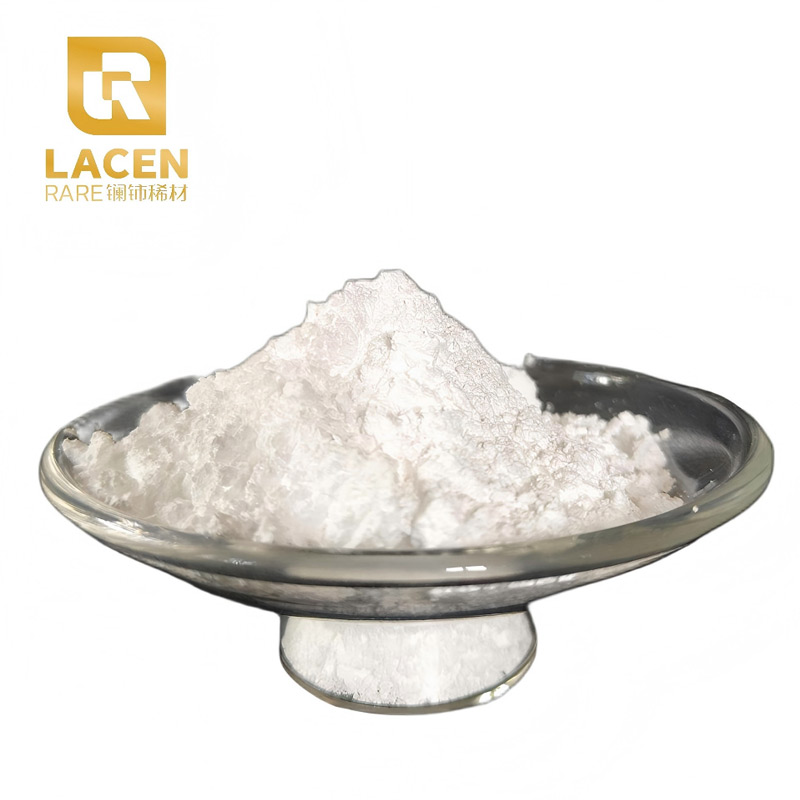
Situated in the lanthanide series of the periodic table, this compound presents physically as a dense, white powder. It possesses a remarkably high melting point of approximately 2,355 degrees Celsius. From a practical standpoint on the factory floor, this thermal resilience is exactly why engineers specify it for extreme-environment applications. Chemically, it exhibits robust stability. It does not readily react with water. However, operators should note that it can be slightly hygroscopic under humid atmospheric conditions. Careful vacuum storage is required to prevent clumping. Its unique electron configuration allows it to seamlessly integrate as an exceptional host and dopant in crystalline lattices.
Historically, Neodymium has served as the default dopant for solid-state lasers. But as engineers continually push for higher kilowatt outputs, Neodymium-doped systems encounter severe thermal lensing issues. This trapped heat essentially distorts the laser beam. Ytterbium outperforms these older alternatives because it lacks excited-state absorption and up-conversion processes.
Specifically, the quantum defect—the energy difference between the pump photon and the emitted laser photon—is significantly lower. This results in a drastic reduction in waste heat generation. Modern manufacturing equipment can therefore operate more efficiently with much smaller cooling footprints.
The optical industry represents one of the most unforgiving environments for material specifications. Engineers developing next-generation photonic devices must source precursors that guarantee minimal signal attenuation and maximum energy conversion. A bad batch of powder can ruin weeks of crystal growth.
Yttrium Aluminum Garnet crystals doped with ytterbium have established themselves as the industry standard for high-power, diode-pumped solid-state lasers. These robust systems are heavily utilized in industrial metal cutting, deep-penetration welding, and precision medical devices. Sourcing the correct ytterbium oxide for laser crystals is absolutely critical during the Czochralski pull process. The melt must remain stable. The precursor oxide must integrate flawlessly into the crystal lattice without causing striations or refractive index variations. The broad absorption bandwidth allows for less stringent requirements on diode temperature control, making the overall laser architecture highly cost-effective.
Beyond solid crystals, this lanthanide derivative is the dopant of choice for high-power silica fiber lasers. Active fibers provide excellent beam quality and high optical-to-optical conversion efficiency that routinely exceeds 70 percent. In fiber manufacturing, the oxide powder is typically introduced via Modified Chemical Vapor Deposition or solution doping techniques. The physical properties of the oxide precursor directly dictate the homogeneity of the dopant distribution within the fiber core. Uniform dispersion is essential to prevent localized heating and photodarkening over the multi-year operational lifespan of the fiber.
In addition to laser generation, this material is highly valued in radiation detection and specialized phosphor manufacturing. When utilized as a dopant in scintillator crystals like LYSO or LuAG, it facilitates the rapid conversion of high-energy photons into visible light. This rapid decay time is non-negotiable for high-resolution medical imaging devices, like PET scanners, and high-energy physics particle detectors. Its proven reliability in these high-stakes environments solidifies its position as a premier rare earth oxide for optical materials.
While optical applications rely on electronic transitions, materials scientists and aerospace engineers leverage the physical mass and ionic radius of ytterbium to engineer advanced structural ceramics.
Modern jet engines and heavy-duty gas turbines operate at temperatures that far exceed the melting point of their internal superalloy components. To survive this inferno, these components are shielded with Thermal Barrier Coatings. Yttria-Stabilized Zirconia is the traditional baseline material. However, doping it with ytterbium significantly lowers the thermal conductivity of the coating. The heavy mass of the ytterbium ion increases phonon scattering within the ceramic lattice. This effectively blocks heat transfer. This critical modification allows turbines to operate at higher firing temperatures, directly translating to increased thermodynamic efficiency and drastically reduced fuel consumption.
Ceramics naturally undergo phase transitions when subjected to extreme heating and cooling cycles. These transitions are accompanied by sudden volume changes. On a microscopic level, this causes micro-cracking, spallation, and catastrophic mechanical failure. The addition of ytterbium oxide acts as a powerful phase stabilizer. By locking the ceramic into a stable crystalline phase from room temperature all the way up to its melting point, the oxide ensures structural integrity over thousands of thermal cycles. This stabilization is particularly crucial in the manufacturing of crucibles, setter plates, and kiln furniture used in high-temperature industrial furnaces.
For procurement managers and materials engineers, sourcing raw materials is rarely a simple purchasing decision. It is a critical engineering parameter. The physical and chemical properties of the input material directly dictate the processing parameters, yield rates, and final performance of the manufactured component.
The purity of rare earth oxides is typically expressed in "nines", representing the percentage of the material that is the target compound relative to Total Rare Earth Oxides and other trace elements.
Purity Grade | Primary Applications | Trace Element Tolerance | Typical PSD Requirement |
|---|---|---|---|
3N to 4N | Structural ceramics, standard TBCs, metallurgy | Moderate. Minor transition metals acceptable. | Sub-micron to 5 microns. Focus on packing density. |
5N | High-power fiber lasers, scintillator crystals | Strict. Measured in parts per million or billion. | Highly customized. Often requires specific surface area control. |
5.5N+ | Quantum computing, advanced optics | Zero tolerance for optical quenchers. | Nano-scale to sub-micron, tight distribution. |
Chemical purity alone does not guarantee processing success. The physical shape and size of the particles are equally critical. When sourcing high purity ytterbium oxide powder, engineers must carefully evaluate the Particle Size Distribution, typically denoted by D10, D50, and D90 metrics. For instance, top-tier suppliers like Lacenrare can customize the D50 from 0.5 to 5 microns depending on whether you are pressing ceramics or pulling crystals.
Nano-scale powders offer exceptionally high reactivity. In ceramic processing, this high surface energy drives faster densification, allowing for lower sintering temperatures. Conversely, micron-scale powders are often preferred for their superior packing density and ease of handling in traditional pressing operations. The morphology dictates how the powder behaves during die compaction. Spherical powders pack more uniformly, reducing microscopic voids in the final ceramic matrix.
Measured via the Brunauer-Emmett-Teller method, specific surface area provides insight into the porosity and reactivity of the powder. A higher value indicates a larger surface area, which can accelerate solid-state reactions during the melting of optical glasses.
Furthermore, flowability is a vital metric on the production line. When an operator pours the batch into an automated hopper, the powder must flow smoothly into the die cavity. Poor flowability, often caused by irregular particle shapes, leads to uneven packing. This creates density gradients and subsequent warping during high-temperature sintering.
Procuring lower-grade materials to reduce initial costs is a dangerous game. It often leads to severe financial penalties later in the production cycle. Impurities actively degrade the performance of the final product, leading to massive rejection rates.
In solid-state lasers, the energy level structure of the dopant must remain isolated. If trace amounts of other rare earth elements like Neodymium, Erbium, or Dysprosium are present, they act as energy sinks. Instead of emitting the desired laser light, the energy is lost as non-radiative decay. This phenomenon is known as optical quenching.
In contrast, transition metal impurities like Iron, Copper, and Chromium exhibit strong absorption bands. Even at concentrations of a few parts per million, these metals absorb the pump light. This generates localized heat that distorts the laser beam profile and can ultimately fracture the expensive crystal.
For advanced ceramics, elements such as Silicon, Calcium, Sodium, and Potassium present severe challenges. These impurities have melting points significantly lower than the primary ceramic matrix. During sintering, they segregate at the grain boundaries and form amorphous, glassy phases. Under the immense centrifugal stress of a turbine blade operating at extreme temperatures, a micro-void caused by a single sodium impurity can become the initiation site for a crack. That crack propagates and destroys the entire coating.
Analyzing recent shifts in the advanced materials sector reveals a growing, critical reliance on tailored rare earth oxides. In industrial manufacturing, there is a distinct trend toward ultra-fast femtosecond lasers. These are heavily used for the micromachining and welding of electric vehicle battery components. These demanding lasers require flawlessly doped gain mediums to handle intense peak powers without thermal degradation.
Similarly, the aerospace sector is pushing for greener, lower-emission aviation. This is driving gas turbine operating temperatures higher than ever before. It accelerates the transition from standard zirconia coatings to advanced, multi-component ceramics doped with heavy rare earths.
Looking toward the horizon of quantum computing and precision timekeeping, ytterbium ions are becoming heavily utilized in trapped-ion qubit systems and atomic clocks. The specific electronic transitions of this element allow for highly stable manipulation and unprecedented accuracy. This indicates that the industrial demand for ultra-high purity precursor powders will only intensify in the coming decade.
Given the severe consequences of material failure, selecting a reliable supplier is a critical risk-management exercise. Engineers must look beyond the initial quotation and evaluate operational maturity.
Rigorous analytical testing is the foundation of material reliability. Buyers should demand a comprehensive Certificate of Analysis detailing the exact testing methodologies. For ultra-high purity grades, Inductively Coupled Plasma Mass Spectrometry or Glow Discharge Mass Spectrometry are industry standards. They are capable of detecting trace elements down to the parts per billion level. X-ray Diffraction should also be employed to verify crystallographic phase purity.
A critical failure point in advanced manufacturing is batch-to-batch variation. Producing a pristine small sample in a lab is vastly different from delivering metric tons of consistent material over a multi-year contract. Inconsistent particle sizes or fluctuating impurity profiles force manufacturers to constantly adjust their sintering profiles or crystal-pulling parameters. This destroys production efficiency.
Top-tier manufacturers possess the metallurgical expertise to customize the oxide powder. Depending on the downstream process, a buyer may require a specific calcination temperature profile. The supplier should have advanced milling capabilities to tightly control the particle size distribution without introducing cross-contamination from the milling media.
The successful production of next-generation laser crystals and advanced structural ceramics hinges entirely on the meticulous selection of foundational materials. Ytterbium oxide continues to drive innovation across these demanding industries by offering unparalleled thermal management and structural stabilization. By rigorously balancing chemical purity, particle size distribution, and morphology, engineers can optimize their manufacturing yields and prevent costly downstream failures.
Ultimately, partnering with a reliable supplier capable of delivering consistent material is not just a procurement task. It is a strategic investment in product excellence. If your production line requires strict control over impurities and particle morphology, explore the white fine powder ytterbium oxide for laser crystal production from Lacenrare to ensure your next batch meets the highest industry standards.
Ytterbium-doped crystals possess a much simpler, two-level electronic energy structure compared to the four-level structure of Neodymium-doped crystals. This fundamental difference drastically reduces excited-state absorption and non-radiative decay. As a result, ytterbium-doped systems generate significantly less thermal loading during operation. This allows them to sustain much higher power outputs without suffering from thermal fracturing.
In optical applications, the material must transmit and amplify light with maximum efficiency. Even trace impurities at the parts per million level can absorb the pump light or the emitted laser light. This absorption destroys the optical efficiency and generates localized heat that can permanently damage the optical matrix.
Particle size directly dictates the surface area and packing behavior of the powder. Smaller, uniform particle sizes offer a higher surface area, which provides a greater thermodynamic driving force during the sintering process. This promotes faster, more uniform densification at lower temperatures, resulting in a stronger final ceramic component with fewer microscopic voids.
Yes, like many rare earth oxides, it can be slightly hygroscopic. This means it absorbs moisture and carbon dioxide from the surrounding atmosphere over time. It is crucial to utilize proper vacuum sealing and store the powder in climate-controlled environments to prevent clumping and outgassing during high-temperature melting.
Absolutely. Advanced materials suppliers can tightly control the morphology of the powder by adjusting chemical precipitation parameters, calcination temperatures, and subsequent milling processes. This ensures the particles are engineered to be spherical, granular, or intentionally agglomerated to suit specific manufacturing techniques like plasma spraying or crystal pulling.
Trace transition metals like iron, copper, and chromium are highly detrimental in optical applications. They create strong absorption bands that trap pump light, converting it into unwanted heat rather than laser emission. In ceramic applications, these metals can lower the melting point at grain boundaries, compromising the high-temperature structural integrity of the final component.
When stored correctly in original, factory-sealed vacuum packaging within a climate-controlled environment, high-purity rare earth oxides have an exceptionally long shelf life, often exceeding several years. However, once the seal is broken and the powder is exposed to ambient humidity, it can begin absorbing moisture within hours, which alters its weighing accuracy and melting behavior.


