


Views: 0 Author: Site Editor Publish Time: 2026-09-20 Origin: Site


Formulating specialty glass demands absolute chemical precision. Samarium oxide stands at the center of this process. Recognized for its exceptional ability to absorb specific wavelengths of infrared radiation, this rare earth compound functions as a highly efficient optical filter. Modern glass manufacturing simply cannot function without it.
However, metallurgists and procurement managers face a highly technical dilemma. What exact purity of samarium oxide is required to ensure optimal glass performance without overspending on unnecessary chemical refinement? Specifying the wrong grade leads to catastrophic furnace contamination or wasted budgets. This comprehensive guide explores specific purity grades, analyzes how trace impurities disrupt optical clarity, and provides actionable insights on selecting the exact raw materials required for advanced glass and ceramic production.
Key Takeaways
Optimal Purity Levels: Specialty glass applications typically require a samarium oxide purity ranging from 99.9 percent to 99.99 percent to prevent optical defects and ensure consistent infrared absorption.
Impurity Control: Trace elements, particularly transition metals such as iron or competing rare earths like neodymium, drastically alter the refractive index, color, and light transmission of the final product.
Versatile Applications: Beyond optical filters, this material is extensively utilized to enhance the dielectric properties of electronic ceramics.
Physical Specifications Matter: Alongside chemical purity, uniform particle size and morphology are crucial for homogeneous melting and integration into the silica matrix.
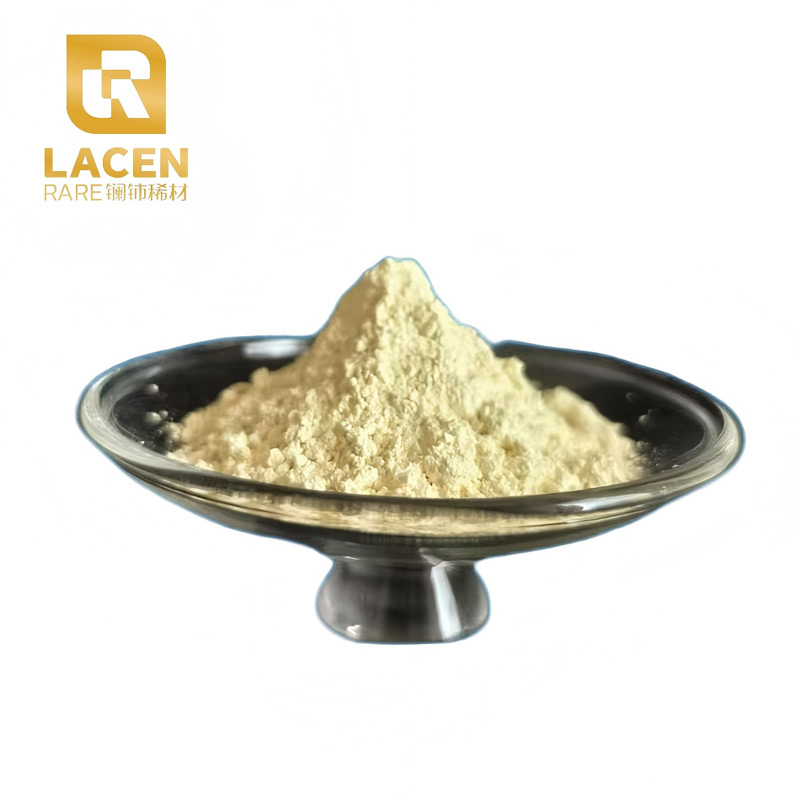
Samarium oxide is a highly stable compound typically presenting as a pale-yellow powder. It features a massive melting point of approximately 2,335 degrees Celsius. At the atomic level, the unique electron configuration of the samarium ion allows it to interact with electromagnetic radiation in highly specific ways. When integrated into a glass matrix, these ions maintain their distinct energy levels. This grants the final product predictable and stable optical characteristics.
The primary value of this material lies in selective optical absorption. Unlike standard colorants, samarium ions strongly absorb infrared light while allowing a significant percentage of visible light to pass through. Specifically, the material also absorbs targeted ultraviolet wavelengths. This selective filtration makes it a critical component in environments where intense heat or harmful non-visible radiation must be blocked without impairing operator vision.
Transforming standard silica into an advanced optical component requires precise doping. When introduced into the glass batch during the melting phase, a high-quality rare earth oxide for specialty glass acts as a network modifier. It alters the atomic structure of the silica, embedding its optical properties uniformly throughout the material. Consequently, this transformation upgrades standard glass into high-tech components utilized in aerospace engineering, medical laser equipment, and industrial safety shielding.
Glass manufacturing operates under strict thermodynamic rules. What happens when a furnace operating at temperatures exceeding 1,400 degrees Celsius encounters an impure batch of raw material? The result is catastrophic. During this volatile melting phase, chemical consistency is non-negotiable. Any microscopic deviation in the chemical makeup of the raw additives inevitably manifests as a physical or optical defect in the cooled glass.
The primary threat to specialty glass is not the samarium itself. The danger lies in the microscopic trace elements that accompany lower-purity grades. Transition metals act as highly reactive colorants. Even minor traces of iron or copper impart a noticeable green, brown, or blue tint. This severely reduces visible light transmission. In high-power laser applications, these impurities absorb energy, leading to localized heating and sudden thermal fracturing.
Furthermore, because rare earth elements are mined together, cross-contamination remains a frequent challenge. Neodymium and praseodymium possess their own distinct absorption spectra. If present in the samarium batch, they absorb wavelengths originally meant to be transmitted. This ruins the precise calibration required for optical filters.
Utilizing sub-standard raw materials results in severe economic consequences. In continuous glass melting operations, an impure batch contaminates an entire furnace. This leads to rejected glass batches, costly furnace downtime for cleaning, and massive energy waste.
In the rare earth industry, chemical purity is denoted by the Nines system. This indicates the percentage of the primary rare earth oxide relative to total rare earth oxides. Grades range from 2N for basic metallurgical uses up to 5N for highly sensitive scientific instruments.
For the majority of infrared-absorbing glass, standard optical filters, and industrial safety eyewear, a purity of 99.9 percent serves as the established baseline. At this 3N level, the concentration of transition metals and competing rare earths remains low enough that it does not perceptibly alter visible light transmission. The 3N grade offers manufacturers a practical balance. It delivers robust optical performance while maintaining cost-effectiveness for large-scale commercial production.
In contrast, highly sensitive applications demand ultra-high purity. A primary example is solid-state laser glass. In these sophisticated systems, samarium-doped glass serves as a cladding around the laser rod to absorb off-axis ultraviolet and infrared emissions. This prevents parasitic oscillation, a phenomenon where unwanted light reflects inside the cavity and depletes laser energy. If the raw material contains even minor neodymium impurities, the cladding absorbs the actual laser wavelength, destroying system efficiency. Therefore, laser glass strictly requires 99.99 percent or even 99.999 percent purity.
Purity Grade | Percentage | Primary Application | Critical Impurity Control |
|---|---|---|---|
3N | 99.9% | Infrared safety glass, thermal sensors | Transition metals tightly restricted |
4N | 99.99% | Solid-state laser cladding, photonics | Neodymium strictly eliminated |
5N | 99.999% | Precision scientific optics, aerospace | Absolute trace element removal |
Looking at the broader manufacturing landscape, a distinct shift is occurring within the photonics sector. The rapid expansion of medical laser surgery and industrial micro-machining is actively reshaping raw material supply chains. As manufacturers push for highly miniaturized solid-state laser systems, the tolerance for thermal distortion has plummeted. This trend is driving a massive industry-wide migration from standard 3N purity grades toward ultra-strict 4N and 5N requirements. Procurement teams are now forced to secure highly refined materials to guarantee maximum energy conversion efficiency in these next-generation devices.
One of the highest volume applications is the production of infrared-absorbing glass. This material is heavily utilized in industrial safety goggles for welders, thermal shielding for sensitive electronics, and specialized thermal sensors. Integrating high purity samarium oxide powder ensures the glass effectively blocks intense heat and infrared radiation. It protects the user while maintaining a clear, undistorted field of vision.
In the realm of photonics, this material optimizes solid-state lasers. Samarium-doped glass filters act as a protective boundary around the active laser medium. By absorbing parasitic wavelengths generated by the flashlamp, the glass prevents overheating. This ensures the maximum amount of energy is directed into the primary laser beam, dramatically improving both output efficiency and operational lifespan.
Precision optical instruments, including spectrophotometers and specialized calibration cameras, also rely heavily on these filters. Engineered to isolate specific wavelengths of light for accurate measurement, the chemical stability of the oxide ensures these lenses never degrade when exposed to prolonged ultraviolet light.
While optical properties dominate the glass sector, this rare earth compound is equally valuable in high-temperature solid-state manufacturing. The material transitions seamlessly from a glass network modifier to a critical component in advanced ceramics. This demonstrates incredible versatility across the advanced materials industry.
Technical requirements differ significantly depending on whether the powder is melted into glass or sintered into a ceramic. Optically clear glass is highly sensitive to color-altering trace metals. Conversely, when utilized as a samarium oxide ceramic additive for components like dielectric resonators or multilayer ceramic capacitors, the material occasionally tolerates slightly different impurity profiles. In ceramics, the primary focus shifts away from optical clarity toward maintaining strict electrical consistency.
In ceramic applications, the oxide acts as a crucial sintering aid and phase stabilizer. It improves the dielectric constant, enhances the structural integrity of the ceramic body under extreme thermal stress, and facilitates the miniaturization of modern electronic components.
For procurement managers evaluating raw materials, chemical purity is only half the equation. Physical characteristics are just as critical to manufacturing success. A powder that easily meets the 99.99 percent purity specification but possesses an irregular physical morphology will still ruin an expensive batch of specialty glass.
Particle Size Distribution dictates exactly how the powder behaves inside the glass furnace. A uniform particle size, typically monitored via specific D50 metrics, ensures rapid and homogenous melting. If the powder contains large, hard agglomerates, they fail to dissolve completely during the melting cycle. This results in unmelted crystalline inclusions in the final glass, causing severe structural weakness and optical distortion. Conversely, an excessive amount of ultra-fine dust gets swept up by furnace updrafts, leading to material loss and inconsistent batch chemistry.
From a thermodynamic standpoint, the specific surface area of the powder directly affects material reactivity. A higher surface area generally allows the samarium to integrate into the silica network more efficiently at lower temperatures. Manufacturers must carefully specify a powder morphology that aligns perfectly with their specific kiln temperatures and mixing protocols.
When sourcing these advanced materials, the Certificate of Analysis serves as the most critical document on a buyer desk. Engineers must verify total purity percentages and scrutinize the detailed breakdown of trace elements. Utilizing advanced analytical methods like Inductively Coupled Plasma Optical Emission Spectroscopy, the certificate must explicitly list the exact parts per million levels of detrimental transition metals and neighboring rare earths.
An optimal supplier offers tailored customization. Depending on the specific glass formulation, a manufacturer often requires a custom particle size distribution or a guaranteed 4N purity level at commercial scales. Partnering with a supplier capable of adjusting milling and calcination processes to meet exact physical and chemical specifications is vital for long-term production stability.
Navigating the rare earth market requires keen awareness of supply chain stability. Ensuring a consistent, high-quality supply keeps continuous glass melting operations running without interruption. Manufacturers must rigorously assess supplier production capacity and quality management systems to guarantee batch-to-batch consistency over years of production.
The precise purity of samarium oxide directly dictates the optical performance and structural success of specialty glass. While 99.9 percent remains the reliable industry standard for general infrared-absorbing glass, high-end optical filters and solid-state laser applications strictly demand 99.99 percent or higher to prevent catastrophic energy loss. By carefully evaluating both chemical trace elements and physical particle size distribution, manufacturers eliminate optical defects and optimize production costs. To secure the exact chemical and physical specifications for your next production run, explore the specialized rare earth solutions available at Lacenrare to match your thermal and optical requirements perfectly.
The most common purity utilized is 99.9 percent. This 3N grade provides excellent infrared absorption properties while keeping raw material costs highly manageable for large-scale commercial production. It ensures no visible light distortion occurs during standard industrial use.
Transition metals like iron, copper, and chromium are highly reactive colorants. Even trace amounts in the parts per million range will impart unwanted green, blue, or brown tints to the glass. This drastically reduces visible light transmission and degrades the optical quality of the final product.
Neodymium possesses its own distinct light absorption spectrum. If it contaminates a samarium batch used for laser glass cladding, it will absorb the specific wavelengths the laser is trying to emit. This causes severe energy loss, overheating, and drastically reduces the operational efficiency of the solid-state laser system.
It depends entirely on the specific purity and particle size of the batch. While the base chemical is identical, optical glass requires much stricter control over color-altering trace metals than standard ceramic applications. Always review the detailed Certificate of Analysis before cross-purposing materials across different production lines.
Yes, physical morphology is equally crucial. Even if the chemical purity is a perfect 99.99 percent, irregular or overly large particles cause uneven melting in the furnace. This leads to physical defects, unmelted inclusions, and structural weaknesses in the final specialty glass product.
It is generally considered to have low toxicity. However, handling fine powders always poses an inhalation risk. Standard industrial hygiene practices, including the mandatory use of dust masks, proper ventilation, and localized exhaust systems, are strictly required to protect workers during mixing and batching phases.


