


Views: 0 Author: Site Editor Publish Time: 2026-09-13 Origin: Site


Extreme environments destroy standard ceramics quickly. Perfect densification during manufacturing remains a massive challenge across high-tech industries. Yttrium oxide solves this by acting as a remarkably powerful sintering aid. In this comprehensive guide, we break down exactly how it enhances ceramic sintering and why precise material selection dictates the success of your production line.
Yttrium oxide acts as a crucial sintering aid. It promotes densification and inhibits abnormal grain growth in advanced ceramics.
It serves as the primary stabilizing agent to create yttria-stabilized zirconia. This prevents catastrophic phase transformations during the cooling cycle.
Using fine particle size powders lowers required sintering temperatures and ensures uniform material shrinkage.
High crystallinity powder significantly reduces structural defects. This directly enhances the mechanical and optical properties of the final component.
Advanced high dispersion nanoscale powders prevent particle agglomeration. They ensure a homogenous matrix critical for solid oxide fuel cells and transparent ceramics.
Yttrium oxide, commonly referred to as yttria, is a highly stable rare-earth oxide. It boasts a staggering melting point near 2,425°C. Beyond its extreme heat resistance, yttria exhibits excellent chemical inertness. It does not readily react with other elements under standard atmospheric conditions. These intrinsic properties make it an indispensable raw material for formulating high-performance ceramics. Structural integrity under severe mechanical and thermal stress is non-negotiable in these applications.
Sintering is the heart of ceramic manufacturing. Compressed green bodies are heated to temperatures just below their melting point. Thermal energy causes the particles to fuse. This eliminates microscopic pores and forms a solid, dense structure. However, factory floors frequently battle stubborn issues. Residual porosity, micro-cracking, and uneven material shrinkage plague pure ceramic batches. Achieving perfect densification in pure materials demands extreme temperature profiles. This inevitably spikes energy consumption and destroys expensive furnace heating elements prematurely.
Recent market data highlights a distinct shift in the advanced ceramics sector. Global manufacturing is aggressively moving toward miniaturized components like multi-layer ceramic capacitors and high-efficiency solid oxide fuel cells. The tolerance for structural defects has plummeted to near zero. Consequently, engineers are abandoning brute-force high-temperature firing. The industry now heavily favors highly engineered nanoscale chemical additives. These advanced materials drive lower-temperature, defect-free densification while drastically cutting carbon footprints and energy overhead.
To overcome these modern manufacturing hurdles, materials scientists introduce yttrium oxide into the ceramic matrix. It alters the grain boundary dynamics of the base material. When distributed evenly throughout the powder, it actively lowers the activation energy required for particles to fuse. From a practical standpoint on the factory floor, this allows for highly efficient densification at much lower temperatures. The result is a denser, stronger, and more reliable final product.
Adding yttria fundamentally changes the thermodynamic environment inside the kiln. Depending on the base ceramic and trace additives present, it facilitates both solid-state and liquid-phase sintering. During liquid-phase sintering, yttria interacts with secondary oxides or trace silica impurities naturally found in raw powders. This interaction forms a transient, low-melting-point liquid phase right at the grain boundaries. Think of it as a microscopic transport highway. It accelerates atomic diffusion and drastically speeds up the densification process. Once the kiln begins its cooling cycle, this phase solidifies. The grains lock into a tightly packed, non-porous microstructure.
High-temperature soaking naturally causes larger grains to consume smaller ones. This reduces the overall surface energy of the system. If left uncontrolled, this phenomenon creates a coarse, brittle microstructure with terrible mechanical strength. Yttria particles segregate at the grain boundaries to exert a physical drag force known as Zener pinning. By pinning these boundaries in place, yttria keeps grain sizes small and uniform. This mechanism maximizes the fracture toughness and structural reliability of the component.
Pure zirconia is notoriously difficult to process. It undergoes a disruptive phase transformation from a tetragonal structure to a monoclinic structure when cooling past 1,170°C. A massive volume expansion accompanies this shift. It typically shatters the ceramic piece right inside the furnace. Integrating yttria into the zirconia lattice creates deliberate oxygen vacancies. These vacancies force the material to remain in its tough tetragonal phase all the way down to room temperature. This completely prevents catastrophic volume expansion.
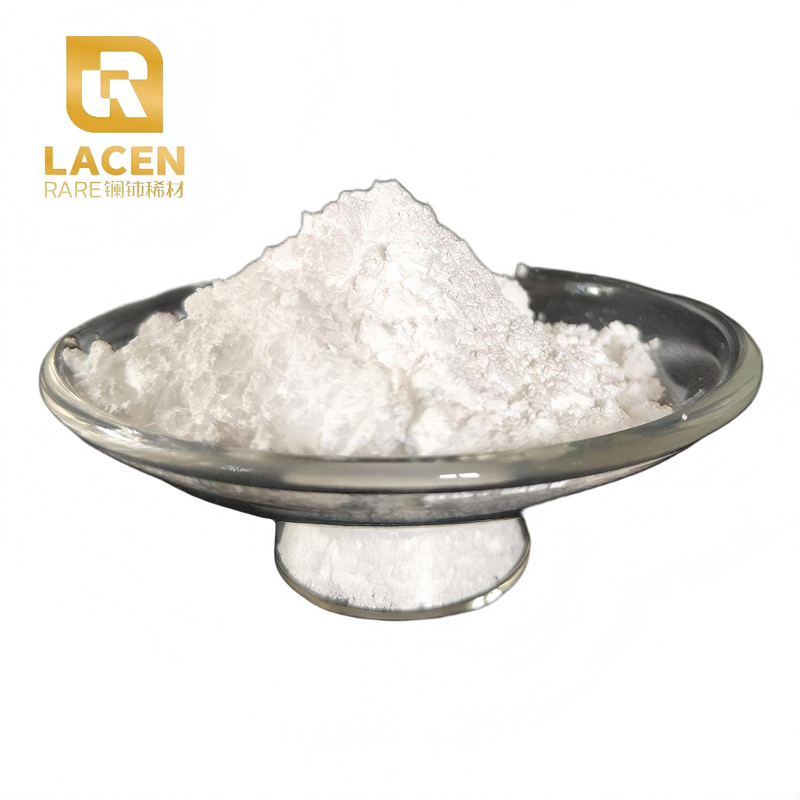
Precise control over raw material properties dictates the success of a firing cycle. Utilizing fine particle size yttria provides massive thermodynamic and mechanical advantages during the densification phase.
Fine powders possess a much higher surface-to-volume ratio. This translates directly to higher surface energy. During the thermal firing process, this excess energy acts as the primary driving force for densification. With a tightly controlled D50 particle size distribution, the contact points between the additive and base ceramic multiply exponentially. This extensive contact network facilitates faster mass transport across grain boundaries. It promotes the rapid solid-state reactions essential for eliminating microscopic voids.
Factory operators can significantly lower peak sintering temperatures by integrating these fine powders. Enhanced reactivity means the activation energy required for atomic diffusion is reached much sooner. Full densification occurs with less heat. This slashes direct manufacturing costs and minimizes thermal degradation risks in temperature-sensitive composite materials.
Dimensional stability keeps engineers awake at night. Uneven particle distribution leads to differential shrinkage during cooling. This causes warping, micro-cracking, or severe structural distortion. Engineered fine powders disperse predictably throughout the base matrix. Volumetric shrinkage occurs isotropically. Maintaining strict dimensional tolerances drastically reduces the need for expensive post-sintering diamond machining.
Internal atomic structure matters just as much as physical size. The degree of crystalline perfection influences exactly how the additive behaves under extreme heat.
A pristine rare-earth oxide features a strictly ordered atomic lattice. Amorphous regions are virtually eliminated. Achieving this requires advanced synthesis techniques and precise calcination controls. The yttrium and oxygen atoms must align in their most stable thermodynamic configuration.
During firing, the additive must integrate seamlessly with primary materials like zirconia, alumina, or silicon nitride. Amorphous impurities introduce vacancies or unwanted secondary phases. Upgrading to high crystallinity yttria powder with up to 99.999 percent purity minimizes these structural anomalies. It forms clean, predictable grain boundaries without outgassing or creating microscopic pores that act as stress concentrators.
Defect reduction directly boosts macroscopic properties. Structural ceramics gain superior hardness and exceptional wear resistance. In the specialized field of transparent ceramics used for laser host materials and ballistic armor windows, high crystallinity is strictly mandatory. Any structural defect or amorphous inclusion scatters light and destroys the optical transmittance of the final component.
Moving to the nanoscale unlocks immense chemical reactivity. However, it introduces physical challenges that require advanced engineering to overcome.
Immense surface area makes nanoparticles highly susceptible to clumping. Strong Van der Waals forces pull them into irregular masses. Dumping agglomerated powder into a ceramic slurry creates localized concentration spikes and dead zones. This heterogeneity causes uneven densification. It leaves behind residual porosity and mechanical weak points in the sintered body.
Advanced surface treatments counteract these attractive forces. Utilizing high dispersion nano yttria ensures the powder remains free-flowing and separated. When mixed into the slurry, it distributes evenly at the microscopic level. Every single grain of the base material receives the exact amount of stabilizing agent required.
High-tech components demand perfect consistency. Solid oxide fuel cells rely heavily on yttria-stabilized zirconia for ionic conductivity. Poor dispersion disrupts the oxygen ion transport network and kills electrical efficiency. In high-performance automotive catalysts, homogeneous dispersion maximizes the active surface area. This optimizes catalytic conversion rates without suffering from thermal degradation over time.
The unique densification properties of yttrium oxide make it an indispensable raw material across multiple high-stakes industries.
Restorative dentistry depends heavily on yttria-stabilized zirconia. It stabilizes the tough tetragonal phase at room temperature. Dental crowns, bridges, and implants achieve tooth-like aesthetics alongside incredible fracture toughness. They easily survive decades of punishing chewing forces.
Jet engine turbine blades operate in environments far exceeding the melting point of their superalloy substrates. Yttrium-sintered ceramics act as thermal barrier coatings to insulate these metallic parts. Their extremely low thermal conductivity and high phase stability prevent the coating from spalling under severe thermal cycling. This extends engine lifespans and dramatically improves fuel efficiency.
Silicon nitride and aluminum nitride are notoriously difficult to sinter due to strong covalent bonds. Yttria reacts with surface silica impurities to form a transient liquid phase. This facilitates particle rearrangement before cooling into a robust grain-boundary phase. It makes these non-oxide materials ideal for high-wear industrial bearings and high-thermal-conductivity semiconductor substrates.
Selecting the proper grade requires an objective analysis of your facility's thermal profile and end-product requirements. Procurement managers must evaluate particle size distribution, specific surface area, and chemical purity. Match the powder specification directly to the intended sintering profile.
Yttrium Oxide Grade | Key Physical Properties | Primary Manufacturing Benefit | Ideal Industrial Application |
|---|---|---|---|
Fine Particle Size | Uniform D50 distribution, high surface energy | Lowers peak sintering temperatures, ensures isotropic shrinkage | Structural ceramics, dental zirconia blanks, mechanical wear parts |
High Crystallinity | Highly ordered lattice, up to 99.999% purity | Eliminates microscopic voids, prevents light scattering | Transparent ceramics, laser host materials, ballistic armor windows |
High Dispersion Nano | Anti-agglomeration treatment, massive nanoscale surface area | Guarantees perfect microstructural homogeneity | Solid oxide fuel cells, high-performance automotive catalysts |
Finer sizes promote lower temperatures and denser packing. High purity prevents color centers or conductive anomalies in optical applications. Highly dispersed nano grades guarantee the perfect homogeneity required for advanced energy systems.
Yttrium oxide is the vital foundation for advanced ceramic manufacturing. By actively promoting densification and stabilizing critical material phases, it allows engineers to push the boundaries of material science. However, the physical properties of the powder itself dictate the final success of the firing process.
Whether you are pressing dental blanks or coating aerospace turbines, material selection dictates your yield. Stop battling residual porosity and uneven shrinkage. Explore LACENRARE’s premium catalog of yttrium oxide powders. Match the exact particle size, crystallinity, and dispersion characteristics to your production line today and guarantee long-term reliability for your next advanced ceramic project.
Typically, 3 mol percent to 8 mol percent is utilized depending on application requirements. A 3 mol percent addition is predominantly used for structural and dental applications where maximum fracture toughness is required. An 8 mol percent addition is used in solid oxide fuel cells where high ionic conductivity is the primary objective.
Yes, it is heavily used alongside alumina to sinter non-oxide ceramics such as silicon nitride and aluminum nitride. The powder reacts with inherent surface impurities to form a liquid phase at the grain boundaries. This drastically lowers the required sintering temperature and improves final density.
Standard nano-powders exhibit strong tendencies to clump together. This creates uneven density and localized porosity during the sintering process. High dispersion variants undergo specific surface treatments to prevent this clumping. It ensures a flawless, uniform microstructure when mixed into ceramic slurries.
Yes, trace impurities have a massive impact. Elements like iron, copper, or chromium will cause unwanted discoloration during high-temperature firing. A purity level of 99.99 percent or higher is strictly required when manufacturing translucent dental crowns or optically clear transparent ceramics.
Concentration directly controls the crystal phase. At 3 mol percent, the material forms a tough tetragonal phase that actively resists crack propagation. Increasing the concentration to 8 mol percent creates a fully cubic structure. While this maximizes ionic conductivity for fuel cells, it sacrifices a significant amount of mechanical fracture toughness.


