


Views: 0 Author: Site Editor Publish Time: 2026-08-23 Origin: Site


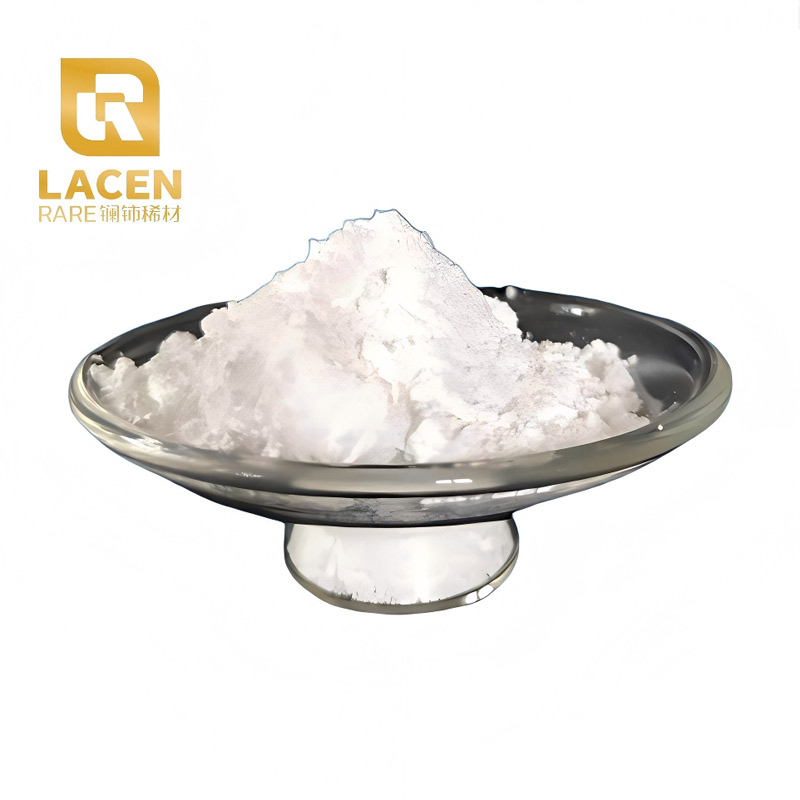
Once a niche chemical curiosity, lanthanum oxide (La₂O₃) now stands as a critical raw material driving modern manufacturing. It powers industries ranging from precision optics to advanced petrochemical refining. This white, odorless powder boasts an exceptionally high melting point of 2,315°C and unique chemical reactivity. It is highly hygroscopic. It rapidly absorbs moisture from the ambient air.
Despite these handling challenges, engineers rely on it daily to solve complex thermal and optical engineering hurdles. We will guide industrial buyers, procurement teams, and engineers through the core applications of this material. You will learn how to evaluate product specifications and navigate complex supply chain realities. Sourcing industrial-grade Lanthanum Oxide requires precise selection criteria to ensure consistent manufacturing performance.
Lanthanum oxide is fundamentally relied upon to increase the refractive index of optical glass and improve the conversion efficiency of petroleum catalysts.
Procurement success hinges on matching the exact physical characteristics—such as selecting fine grained lanthanum oxide—to the specific manufacturing process.
Batch-to-batch consistency and trace impurity profiles (e.g., Iron or Calcium limits) are the primary differentiators between standard and high-performance suppliers.
Because it is highly hygroscopic, evaluating a supplier's packaging and logistics protocols is as critical as evaluating the material itself.
Manufacturers frequently struggle to identify cost-effective yet chemically stable compounds for extreme industrial environments. High-temperature environments and advanced optical applications demand specialized materials. Many engineers face a difficult choice. They must balance raw material costs against the stringent performance requirements of their end products.
Lanthanum holds a unique position. It is the first element in the lanthanide series. Because it is highly abundant in minerals like monazite and bastnäsite, it remains one of the most accessible elements within the broader rare earth oxide series. Its extraction and refinement processes are well-established. This commercial accessibility makes it highly attractive compared to heavier, scarcer rare earth elements like lutetium or terbium.
The baseline value proposition of this material is undeniable. It delivers three primary functional contributions to modern manufacturing:
Extreme Thermal Stability: It resists structural degradation at temperatures exceeding 2,000°C.
Low Dispersion Profiles: It radically alters how light travels through solid glass structures.
Catalytic Reactivity: It acts as a powerful structural stabilizer for complex chemical reactions.
Modern optics rely heavily on specialized chemical additives. Historically, manufacturers used lead oxide to manipulate glass properties. Environmental regulations, such as RoHS, severely restricted lead usage. Lanthanum compounds successfully replaced lead oxide in glass formulations.
The mechanism is straightforward. Adding this rare earth oxide significantly increases the refractive index of the glass. Simultaneously, it decreases chromatic dispersion. Light bends more efficiently without breaking into unwanted color spectrums. This specific trait improves the Abbe number of the final glass product.
These chemical adjustments yield profound outcomes. You will find this specialized glass in high-end camera lenses. Microscope optics and specialized astronomical telescopes also depend on it. Without it, achieving ultra-clear, distortion-free magnification would require prohibitively thick lens stacks.
Best Practice: Always strictly limit transition metal impurities (like iron or copper) in optical formulations. Even trace amounts will cause severe light absorption and unwanted color tints.
The petrochemical industry demands robust catalysts to break down heavy crude oil. Fluid Catalytic Cracking (FCC) is a cornerstone process in modern refineries. FCC catalysts utilize synthetic zeolites to facilitate these massive chemical breakdowns.
The mechanism involves structural stabilization. High heat and extreme steam environments easily destroy zeolite frameworks. Introducing rare earth elements into the zeolite structure prevents this collapse. They act as microscopic anchors. They lock the aluminum and silicon atoms securely in place.
The outcomes are highly measurable for refinery operators. The stabilized catalyst dramatically improves gasoline yields. It reduces thermal degradation inside the reactor. Ultimately, it extends the operational lifespan of the catalyst in extremely harsh refinery environments. This longevity reduces plant downtime and limits frequent catalyst replacement cycles.
Structural ceramics and high-performance alloys face immense physical stress. They operate in aerospace engines, cutting tools, and specialized medical devices. Adding precise dopants improves their fundamental mechanical properties.
The mechanism relies on microstructural control. In ceramics, the oxide acts as a potent grain growth inhibitor. During the high-temperature sintering process, it prevents the ceramic grains from growing too large. Finer grains create a denser, tougher material. In metallurgy, it serves as a critical sintering aid.
These mechanisms produce exceptional outcomes. Structural ceramics gain enhanced thermal shock resistance. They can survive rapid heating and cooling cycles without cracking. In metallurgy, adding the oxide improves the high-temperature tensile strength of molybdenum and tungsten alloys. For example, lanthanated tungsten electrodes provide superior arc stability and longevity during TIG welding.
Purchasing raw chemicals requires strict attention to detail. Procurement teams must match exact physical and chemical traits to their intended applications. Evaluating lanthanum oxide products requires a multi-tiered approach.
Purity Grades and Ideal Applications
Purity Level | Primary Industry | Typical Application | Cost Implication |
|---|---|---|---|
99.0% - 99.5% | Metallurgy | Alloy doping, welding electrodes | Most economical |
99.9% (3N) | Petrochemicals | FCC catalysts, exhaust catalysts | Standard industrial pricing |
99.99% (4N) | Advanced Ceramics | Structural ceramics, solid oxide fuel cells | Premium pricing |
99.999% (5N) | Precision Optics | High-index camera lenses, telescope glass | Highest cost premium |
Mapping purity levels to specific uses prevents severe financial waste. Over-specifying purity unnecessarily inflates costs for metallurgical applications. A 99.999% grade provides zero added benefit to a tungsten electrode. Conversely, under-specifying purity will permanently ruin optical glass batches. Just a fraction of a percent of unwanted elements can turn clear glass cloudy or tinted.
Particle Size Distribution (PSD) is equally critical. You must evaluate the D50 and D90 metrics on the specification sheet. Catalyst manufacturing and specialized ceramics strictly require fine grained lanthanum oxide. Finer particles provide a significantly larger active surface area. This ensures uniform dispersion during mixing and maximizes chemical reactivity during calcination.
Trace impurity limits demand intense scrutiny. Specific contaminants interfere drastically with end-products. Neodymium oxide (Nd₂O₃) or iron oxide (Fe₂O₃) are common residual impurities. Iron causes green or brown color tints in optical glass. Calcium impurities disrupt the shrinking and densification stages of ceramic sintering.
Engineers face significant physical challenges once the material arrives at the facility. You must prepare your production lines for the realities of handling highly reactive rare earth powders.
This compound is intensely hygroscopic. It aggressively absorbs atmospheric moisture. When exposed to humid air, it chemically reacts to form lanthanum hydroxide [La(OH)₃]. This reaction causes severe volume expansion. If this happens before manufacturing, it causes ceramics to crumble during firing. It causes glass to trap unwanted water molecules, leading to fatal structural bubbles.
Your solution approach requires uncompromising packaging standards. You must ensure suppliers utilize vacuum-sealed bags. These bags should reside inside argon-filled steel drums. Facility storage controls must include climate-controlled warehouses. You should implement strict protocols limiting the time containers remain open on the factory floor.
Do not accept shipments based on trust alone. You need verified documentation. Emphasize the need for accurate Technical Data Sheets (TDS) and up-to-date Safety Data Sheets (SDS). Transparent, lot-specific Certificates of Analysis (CoA) per batch are non-negotiable. The CoA must detail the exact particle size distribution and a full trace metal breakdown.
Common Mistake: Accepting a "typical analysis" document instead of a lot-specific CoA. A typical analysis only shows historical averages. It does not guarantee the quality of the exact batch sitting on your receiving dock.
Acknowledge the geopolitical realities of sourcing rare earth elements. Processing capabilities are concentrated in a few global regions. Supply chain disruptions occur due to regulatory shifts, export quotas, and mining restrictions. Emphasize the importance of partnering with suppliers who possess diverse processing capabilities. A reliable supplier maintains adequate domestic safety stock to buffer against sudden international shipping delays.
Transitioning from technical evaluation to commercial procurement requires a structured vetting process. You need a reliable evaluation framework to audit potential partners.
First, audit a supplier's calcination and milling capabilities. Ask specific questions about their milling equipment. Do they use jet mills or ball mills? Jet milling generally provides tighter particle size control. It guarantees the consistent delivery of fine-grained powders without introducing grinding media contamination. Request detailed quality control flowcharts from their processing facilities.
Implement a rigorous sampling protocol. Never commit to metric-ton commercial agreements based on a PDF document. Recommend requesting a lab-scale sample. A 1kg to 5kg batch is sufficient for initial bench testing. Your engineering team must fire the sample in your own kilns or blend it in your own reactors. Measure the real-world performance against the provided CoA.
Watch closely for supplier red flags during the vetting stage. Warn your procurement team against suppliers who hesitate to provide lot-specific CoAs. Avoid vendors who lack secure, moisture-proof packaging infrastructure. If a supplier ships a sample in a simple, unsealed plastic tub, they do not understand the hygroscopic nature of the material. They will likely fail large-scale commercial deliveries.
Sourcing these advanced industrial materials is never a simple commoditized transaction. It requires precise alignment between chemical specifications and your end-use application. Understanding the nuances of particle size, trace impurities, and hygroscopic behavior protects your manufacturing yields.
To succeed, you must mandate strict packaging protocols. You must audit supplier milling capabilities. You must match purity grades exactly to your industry requirements to maintain cost efficiency while ensuring high performance.
Begin your qualification process today. Request a technical consultation with your shortlisted suppliers. Download a detailed Technical Data Sheet (TDS) to cross-reference against your engineering requirements. Finally, request a secure material sample to initiate immediate bench testing.
A: Optical applications require a minimum purity of 99.99% (4N) to 99.999% (5N). Manufacturers must strictly limit transition metal impurities like iron, copper, and nickel. Even trace amounts of these metals will absorb light, lower the Abbe number, and cause severe color tinting in the final glass.
A: Finer grains inherently provide a much larger active surface area. This increased surface area maximizes chemical reactivity during the catalyst formulation process. It ensures the rare earth elements disperse uniformly throughout the zeolite framework. This uniformity directly impacts and dramatically improves overall catalytic cracking efficiency.
A: The shelf life depends entirely on packaging integrity. Because the powder is highly hygroscopic, exposure to ambient humidity rapidly degrades it into lanthanum hydroxide. If kept in factory-sealed, argon-filled, vacuum-tight containers within a climate-controlled environment, it remains stable for several years.
A: It presents generally low toxicity levels. However, fine particulate dust irritates the respiratory tract, eyes, and skin. Standard Personal Protective Equipment (PPE) is strictly required. Operators must wear respirators, safety goggles, and industrial gloves when handling the raw powder to comply with standard Safety Data Sheet (SDS) guidelines.


