


Views: 0 Author: Site Editor Publish Time: 2026-09-17 Origin: Site


Lanthanum oxide heavily drives modern industrial manufacturing. It serves as a foundational component in high-index optical glass, solid-oxide fuel cells, and advanced refractories. However, managing this critical rare earth material on the factory floor presents a severe chemical challenge. It acts like a sponge for moisture. Expose it to ambient conditions, and the powder rapidly absorbs water and carbon dioxide. This reaction fundamentally alters its chemical structure. Poor storage degrades material purity. It skews stoichiometric ratios during production. Ultimately, it wastes significant capital. Proper handling goes far beyond basic safety compliance. It is a strict operational strategy designed to protect your financial investment and ensure uncompromising product quality.
Moisture is the Primary Threat: The material reacts aggressively with ambient air to form hydroxides and carbonates. This ruins its effectiveness in precision manufacturing.
Application-Specific Protocols: Different physical forms require entirely different handling. Nano-grades suffer from rapid clumping. Flake grades present severe mechanical dust hazards.
Strict Packaging is Mandatory: Industrial buyers must demand vacuum-sealed, double-lined packaging housed within rigid airtight drums.
Safety First: Fine rare earth dust requires specialized Personal Protective Equipment to prevent respiratory damage and mechanical skin irritation.
Material Recovery is Possible: You can often salvage moisture-compromised inventory through a strictly controlled high-temperature re-calcination process.
To effectively manage this material, facility engineers must first grasp its true chemical behavior. Unlike stable transition metal oxides, lanthanum oxide is inherently unstable in normal atmospheric conditions. Upon interaction with ambient humidity, it undergoes a rapid hydration reaction to form lanthanum hydroxide. Concurrently, it binds with atmospheric carbon dioxide to generate oxycarbonates.
Why does this matter to an engineer? These chemical conversions directly alter the physical properties of the powder. The mass and volume of the material increase significantly. Precision manufacturing relies on exact molar masses. If you feed a hydrated compound into your melting furnace instead of a pure oxide, your thermodynamic calculations will fail. This leads to highly unpredictable behaviors during sintering.
Raw material degradation translates directly to massive financial loss. Utilizing moisture-compromised inventory leads to catastrophic batch failures. Imagine a premium optical glass facility discovering microscopic bubbles in a final lens batch. This happens simply because the raw oxide absorbed warehouse humidity. Similarly, in advanced ceramics, trapped water vapor releases during high-temperature processing. This causes micro-fractures, structural porosity, and complete mechanical failure. Protecting these sensitive powders is the only reliable way to preserve the return on investment for bulk purchases.
Global supply chain volatility forces manufacturers to rethink raw material buffers. Facilities can no longer rely on just-in-time deliveries for critical rare earths. Consequently, we are seeing a massive industry shift toward automated, climate-controlled warehousing.
Industrial buyers are aggressively investing in localized dry-room technologies. Smart internet-connected humidity sensors now provide real-time alerts directly to facility managers. This data-driven approach prevents silent material degradation during unpredictable weather shifts. Furthermore, strict chemical isolation is becoming the standard. Modern facility designs ensure rare earth oxides remain in dedicated sectors. Keeping them far away from strong acids or halogens eliminates any risk of airborne cross-contamination.
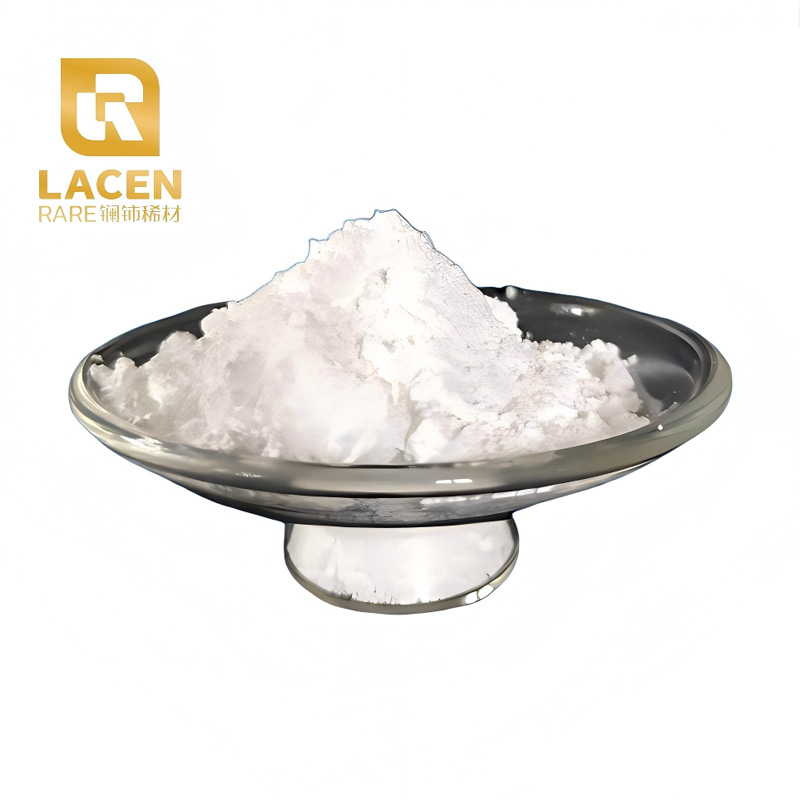
The physical morphology of the powder dictates your exact handling challenges. Nanoscale powders possess a massive surface-area-to-volume ratio. This exponentially amplifies their chemical reactivity. For instance, nanometer lanthanum oxide for coatings will agglomerate rapidly if exposed to even microscopic amounts of moisture.
When handling nano-grades, operators must absolutely minimize exposure time to ambient air. Transferring the powder should strictly occur inside a dry-air glovebox or a specialized laminar flow hood. If the nanoparticles absorb moisture, capillary forces bind them into hard clumps. These agglomerates refuse to disperse evenly into coating slurries. The inevitable result includes uneven thicknesses, optical defects, and compromised mechanical properties in the final product.
In contrast, refractory production presents a completely different set of operational hurdles. When managing flake lanthanum oxide for refractory applications, facilities handle massive bulk quantities. Flake grades have a lower surface area. This makes them slightly less susceptible to rapid moisture absorption. However, they generate significant particulate matter during transfer.
The mechanical friction of flakes rubbing together during high-shear mixing generates fine, airborne dust. To mitigate this hazard, facilities must abandon open pouring methods. Instead, you must utilize enclosed pneumatic conveying systems. Heavily ventilated dumping stations are also required to capture particulate suspension before it disperses into the wider factory environment.
Material Grade | Typical Purity | Primary Vulnerability | Required Handling Protocol |
|---|---|---|---|
Nanometer Powder | 99.99% - 99.999% | Rapid agglomeration via moisture | Glovebox transfer, inert atmosphere |
High Purity Standard | > 99.99% | Hydroxide/Carbonate conversion | Climate-controlled dry room, < 30% Humidity |
Industrial Flake | 99.5% - 99.9% | Airborne mechanical dust generation | Pneumatic conveying, local exhaust ventilation |
The foundation of rare earth management lies in creating the optimal physical environment. Warehouses storing these materials must maintain strict climate control. Relative humidity must stay below 30 percent. Standard room temperatures between 15 and 25 degrees Celsius are generally sufficient. However, these temperatures must remain highly stable to prevent condensation cycles on the packaging.
Facilities should implement industrial-grade desiccant dehumidifiers. Standard refrigerant models simply cannot maintain ultra-low moisture levels effectively. Furthermore, direct contact with concrete floors is a frequent operational oversight. Concrete is porous and continuously emits trace amounts of moisture vapor. Always elevate your drums using heavy-duty plastic or treated wooden pallets.
When procuring high purity lanthanum oxide, standard bulk bags are entirely inadequate. You need a multi-layered barrier approach. The optimal configuration begins with a Low-Density Polyethylene inner liner. This bag sits inside a heavy-duty aluminum foil bag to block moisture vapor transmission. The supplier must then vacuum-seal or flush this bag with an inert gas like argon. Finally, rigid steel or heavy-duty fiber drums protect the seals against mechanical punctures during forklift handling.
Your receiving team must establish a rigorous Quality Control checklist. Do not just count the drums upon arrival. Visually inspect the exterior for compromised locking rings. Open a random sampling of drums to verify the internal vacuum seals. A loose or puffy aluminum bag indicates a broken vacuum. This suggests atmospheric exposure. Flag any compromised packaging immediately for Loss on Ignition testing.
While this oxide has low systemic toxicity, it is far from benign. The primary occupational hazard stems from mechanical irritation caused by fine particulate matter. Inhaling rare earth dust severely irritates the respiratory tract. Standard safety gear is non-negotiable on the factory floor.
Workers handling the dry powder must wear approved P100 particulate respirators. Standard masks fail to block nanometer-sized particles completely. Tight-fitting, unvented safety goggles are required to prevent abrasive dust from scratching the cornea. The powder also acts as a mild desiccant. It strips natural oils from the skin, leading to contact dermatitis. Nitrile gloves and long-sleeved protective coveralls must be standard operating procedure.
Managing dry spills requires deliberate care. Sweeping a powder spill with a standard broom is a critical error. It merely aerosolizes the powder. This creates a massive inhalation hazard and spreads the contaminant across your facility. Always clean spills using industrial vacuums equipped with True HEPA filters. Additionally, install Local Exhaust Ventilation systems directly at your mixing and weighing stations. Capturing dust exactly at the source ensures a safe breathing zone for your operators.
Proper inventory management acts as your final operational safeguard. Even with flawless packaging, minimizing storage duration inherently reduces risk. Industrial buyers must enforce a strict First-In First-Out inventory rotation system. Integrate batch tracking into your enterprise software. Ensure older stock is consumed before newer shipments. This minimizes the statistical probability of packaging seal failure over time.
If a batch absorbs moisture, it is not necessarily destined for the scrap heap. You can often salvage the material through a technical thermal process known as re-calcination. The hydration reaction is reversible with intense heat. Place the compromised powder in an industrial muffle furnace and heat it between 800 and 1000 degrees Celsius. This treatment drives off the absorbed water and carbon dioxide. It effectively converts the compound back into pure oxide. Just note that this intense heat may cause particle sintering. You will likely need secondary milling to achieve the original particle size distribution.
Mastering the storage and handling of sensitive rare earths is essential for maintaining operational efficiency. You must strictly control ambient moisture, enforce rigorous inventory rotation, and protect your workforce with appropriate ventilation. However, your internal protocols are only as strong as your supplier's logistics.
Are you struggling with compromised raw materials or inconsistent batch quality? It is time to upgrade your supply chain. Lacen Rare Earth provides customized, high-purity solutions engineered for your exact industrial applications. From vacuum-sealed nano-powders to bulk refractory flakes, we ensure your material arrives perfectly dry and ready for immediate production. Partner with Lacen Rare Earth today to secure your manufacturing quality and protect your capital investment.
It rapidly absorbs ambient moisture and carbon dioxide. This chemical reaction transforms the pure material into hydroxides and carbonates. This increases the material's mass, causes severe clumping, and ruins its precise performance characteristics in industrial applications.
If the material remains in its original, unopened, vacuum-sealed packaging within a climate-controlled warehouse, it can be stored for several years without degradation. The warehouse must maintain relative humidity below 30 percent. Once you break the vacuum seal, you must use the material immediately or transfer it to an industrial desiccator.
It is considered slightly to moderately toxic. The primary occupational risks are not systemic poisoning, but rather the inhalation of fine dust and mechanical irritation to the skin and eyes. Proper protective equipment, including particulate respirators and nitrile gloves, must always be worn during handling.
Yes. Powders that have clumped due to moisture exposure can often be restored through a high-temperature calcination process. Heating the material up to 1000 degrees Celsius reverses the hydration. However, this thermal process often causes the nanoparticles to fuse together. You will require secondary milling to restore the specific nano-particle size.
For refractory and ceramic bulk use, flake grades should be transported in sealed heavy-duty drums or specialized bulk bags. You must transfer the material into mixers using enclosed pneumatic conveying systems. If pouring is necessary, it must be done under robust local exhaust ventilation to capture airborne dust immediately.
Engineers typically utilize a Loss on Ignition test. A precise sample of the powder is weighed, then heated in a furnace to extreme temperatures to burn off volatile compounds like water and carbon dioxide. The sample is weighed again after cooling. The difference in mass accurately determines the level of atmospheric contamination.
The ideal temperature ranges between 15 and 25 degrees Celsius. However, temperature stability is far more important than the exact degree. Rapid temperature fluctuations cause condensation to form on the inside or outside of the packaging, which severely increases the risk of moisture breaching the seals.


