


Views: 0 Author: Site Editor Publish Time: 2026-09-21 Origin: Site


Industrial and architectural coatings face strict performance demands for long-term weatherability, where UV-induced degradation leads to yellowing, embrittlement, and gloss loss. Traditional organic UV absorbers degrade over time, while conventional inorganic blockers like standard TiO2 or ZnO often compromise optical clarity or accelerate binder degradation through high photocatalytic activity. Formulators must balance permanent UV protection with coating transparency and matrix stability. We transition to evaluating Nano Cerium Oxide as a high-efficiency, inorganic alternative. Outline the necessity of understanding its absorption mechanisms, dispersion challenges, environmental health and safety (EHS) profiles, and cost-to-performance trade-offs before integrating it into commercial coating formulations.
Permanent UV Shielding: Unlike organic absorbers, nano cerium oxide provides non-sacrificial, long-lasting UV absorption (primarily in the UVA and UVB spectrum) without degrading under prolonged sunlight exposure.
Low Photocatalytic Activity: Compared to nano-TiO2, cerium oxide exhibits significantly lower photocatalytic activity, meaning it protects the coating matrix without inadvertently oxidizing the polymer binder.
Optical Clarity: When properly dispersed, the nanoscale particle size prevents visible light scattering, maintaining high transparency for clear coats in automotive, wood, and optical applications.
Formulation Dependency: Successful implementation relies heavily on sourcing ultra fine dispersible nano ceria and utilizing appropriate surface modifiers to prevent agglomeration in the liquid phase.
You must understand the physical chemistry governing electromagnetic interaction to utilize this material effectively. The performance of cerium oxide (CeO2) as a UV shield depends entirely on its electronic structure and strict particle size control during the milling phase.
Cerium oxide features an inherent band gap ranging from 3.0 to 3.2 electron volts (eV). This specific energy threshold dictates its capacity to absorb radiation in the ultraviolet spectrum, specifically targeting wavelengths below 400 nanometers. When high-energy UV photons strike the dispersed nanoparticles, the absorbed energy exceeds this band gap. This physical event forces electrons to transition from the valence band into the conduction band.
Through this quantum mechanical process, the destructive energy of ultraviolet light converts into a harmless state. The excited electrons eventually return to their ground state, dissipating the absorbed UV energy as low-grade thermal energy via non-radiative relaxation. This continuous cycle ensures UV radiation neutralizes before it penetrates deeper into the coating film to initiate photo-oxidation of the polymer chains. Formulators rely on this mechanism to protect sensitive substrates like wood and polycarbonate.
Material | Band Gap (eV) | Primary Absorption Range | Photocatalytic Activity |
|---|---|---|---|
Cerium Oxide (CeO2) | 3.0 - 3.2 | UVA & UVB (<400 nm) | Very Low |
Titanium Dioxide (Rutile) | 3.0 | UVA & UVB (<410 nm) | High |
Zinc Oxide (ZnO) | 3.3 | UVA & UVB (<380 nm) | Moderate |
Maintaining optical clarity remains the primary hurdle when incorporating inorganic powders into clear coats. The solution relies on the physics of Rayleigh scattering. According to Rayleigh's theory, the intensity of scattered light is proportional to the sixth power of the particle diameter and inversely proportional to the fourth power of the wavelength. If particles exceed a specific size threshold, they scatter visible light, resulting in a milky, opaque, or hazy appearance that ruins clear coat aesthetics.
You must maintain a primary particle size strictly below the 20 to 30 nanometer threshold. At this scale, the particles remain significantly smaller than the wavelengths of visible light, which span from 400 to 700 nanometers. Because the particles represent a fraction of the visible wavelengths, light passes through the coating film without interference. This strict size control prevents opacity and haze, allowing you to formulate high-gloss, crystal-clear finishes suitable for demanding applications like automotive topcoats and optical lenses.
Selecting the correct UV absorber requires benchmarking performance metrics across different chemical families. When evaluating a rare earth oxide for functional coatings, you must compare it directly against traditional inorganic oxides and organic chemical absorbers to justify the formulation shift.
Nanoscale TiO2 and ZnO serve as common inorganic UV blockers, but secondary chemical reactions limit their application in clear coats. TiO2 provides excellent UV absorption, yet it remains highly photocatalytic. Under UV irradiation, TiO2 generates reactive oxygen species (ROS) such as hydroxyl radicals. These free radicals aggressively attack the surrounding polymer binder, leading to chain scission, chalking, and premature film failure.
Cerium oxide completely alters this dynamic. It features a unique crystalline structure characterized by oxygen vacancies and the ability to cycle rapidly between Ce3+ and Ce4+ oxidation states. This redox couple acts as a built-in free radical scavenger. Instead of generating destructive ROS, cerium oxide actively neutralizes existing free radicals within the matrix. It provides a dual-layer defense: absorbing the UV light and chemically protecting the binder from oxidative stress.
Organic UV absorbers (UVAs) and Hindered Amine Light Stabilizers (HALS) dominate the coatings industry. However, they suffer from inherent physical limitations. Organic UVAs remain susceptible to thermal degradation and volatilization during high-temperature curing processes, such as those used in coil coatings or automotive OEM bake cycles. Over a 10-plus year lifecycle, organic molecules migrate to the surface and leach out of the coating film due to environmental exposure and solvent wipe-downs.
Inorganic oxides offer permanent matrix integration. Because they exist as solid mineral particles, they do not volatilize at high temperatures, nor do they migrate through the crosslinked polymer network. Once you properly disperse and lock them into the cured film, their UV shielding capacity remains constant for the entire lifespan of the coating.
Advanced formulation strategies rarely rely on a single additive. You achieve superior weatherability by combining nano cerium oxide with organic HALS. This creates a highly effective synergistic system. The inorganic nanoparticles act as the primary shield, blocking the vast majority of UV penetration through physical absorption. Meanwhile, the HALS act as a secondary defense mechanism, neutralizing any residual surface free radicals generated by trace amounts of UV light that manage to bypass the nanoparticles. This combination significantly extends the gloss retention and structural integrity of exterior clear coats.
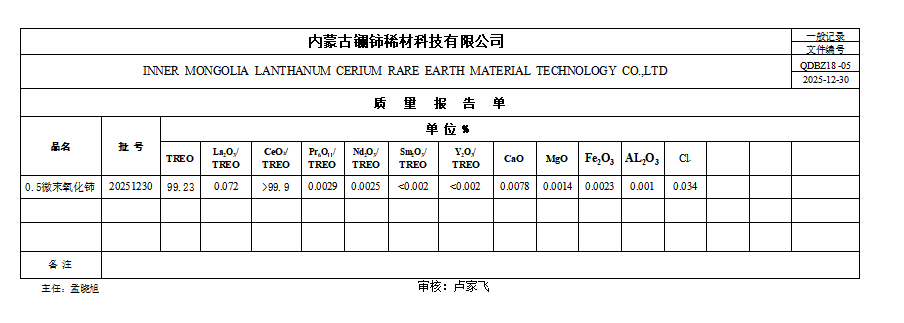
Theoretical performance only translates to real-world success if you can properly integrate the material into the liquid coating. Working with industrial nano cerium oxide powder presents distinct manufacturing challenges that require specialized equipment and chemical modifiers.
The primary implementation risk stems from the physical nature of nanoparticles. Due to their massive surface area-to-volume ratio, these particles possess extremely high surface energy. In a liquid medium, they naturally attract each other to reduce thermodynamic instability, forming hard agglomerates and soft flocculates. If left unchecked, these secondary structures exceed the Rayleigh scattering threshold. This instantly introduces haze, reduces the effective UV absorbing surface area, and creates microscopic surface defects that compromise the final film integrity.
Overcoming agglomeration requires sourcing ultra fine dispersible nano ceria pre-treated with specific silane coupling agents or polymeric dispersants. These surface modifiers provide steric hindrance. The long polymer chains of the dispersant anchor to the nanoparticle surface, creating a physical barrier that prevents particles from approaching close enough for Van der Waals forces to induce flocculation.
Mechanically, achieving a stable dispersion requires high-energy milling. Standard high-speed dispersers (Cowles blades) fail entirely at breaking down nanoscale agglomerates. You must utilize horizontal bead mills loaded with high-density yttria-stabilized zirconia media. Precise control over tip speed, residence time, and milling temperature breaks down secondary agglomerates into their primary nanoscale form without fracturing the particles or burning off the dispersant package.
Milling Parameter | Recommended Range | Impact on Dispersion |
|---|---|---|
Zirconia Media Size | 0.05 mm - 0.2 mm | Smaller media provides more shear points for nanoscale deagglomeration. |
Rotor Tip Speed | 10 - 14 m/s | High enough to break agglomerates, low enough to prevent thermal degradation. |
Mill Base Temperature | < 40°C | Prevents dispersant failure and solvent flash-off during high-shear processing. |
Incorporation requires strict adherence to processing sequences. You can accomplish this through two primary methods, though one offers significantly lower risk for general manufacturing facilities.
Dry Powder Grind Phase Addition: Add the dry powder directly into the mill base alongside the primary resins and dispersants. Run the mixture through a horizontal bead mill until the Hegman gauge reading indicates a nanoscale grind. This requires specialized on-site milling equipment and extensive rheology optimization.
Pre-Dispersed Slurry Let-Down Addition: Purchase a pre-milled, stabilized nano-slurry from the supplier. Introduce this liquid dispersion during the let-down phase under low shear mixing. This eliminates the need for specialized milling on-site, reduces processing time, and guarantees a consistent primary particle size distribution in the final batch.
Compatibility Verification: Draw down the final mixture on a glass panel to check for immediate flocculation, seeding, or haze development before packaging.
Integration strategies vary depending on the resin chemistry. In waterborne systems, nanoparticles must feature hydrophilic capping agents or utilize non-ionic/anionic surfactants to maintain stability across pH shifts. In solvent-borne systems, compatibility with the specific solvent blend (polarity and evaporation rate) dictates the choice of polymeric dispersant. For 100% solids UV-curable systems, you must ensure the nano ceria does not block the specific UV wavelengths required by the photoinitiators to cure the film.
You must monitor the impact of the nanoparticles on coating rheology. High surface area powders cause significant viscosity drift over time, reducing the shelf-life of the liquid formulation. Compatibility testing verifies that the surface modifiers on the nanoparticles do not inadvertently react with crosslinkers, such as isocyanates in polyurethanes or amines in epoxies.
Validating the efficacy of a new UV shielding system requires rigorous, standardized testing protocols. You evaluate success across three primary dimensions: weathering resistance, mechanical enhancement, and substrate protection.
Long-term performance verification relies on accelerated weathering chambers. You run QUV accelerated weathering (using UVA-340 or UVB-313 lamps) and Xenon arc testing (per ASTM G154 or G155 standards) to simulate years of outdoor exposure in a matter of thousands of hours. During these tests, technicians measure gloss retention using a gloss meter at 20° and 60° angles. Color shift, denoted as ΔE, is calculated using a spectrophotometer to measure changes in the L*, a*, and b* color space coordinates. A successful formulation maintains high gloss and exhibits a ΔE of less than 2.0 after 3,000 hours of continuous exposure.
Beyond UV protection, inorganic nanoparticles provide secondary mechanical benefits. Because cerium oxide exists as a hard mineral, its integration into a softer polymer matrix creates a nanocomposite structure. This significantly improves the scratch resistance, mar resistance, and overall film hardness of the coating. Testing methodologies like the Taber abrasion test or crockmeter mar testing show marked improvements in physical durability. Because the particles remain at the nanoscale, they reinforce the film without compromising its inherent flexibility or impact resistance.
The ultimate goal of a clear coat involves protecting the underlying material. In wood coatings, UV light rapidly degrades lignin, causing the wood to bleach, yellow, and lose structural integrity at the surface. A highly transparent, highly absorptive coating prevents this photo-oxidation, preserving the natural grain and color of the timber. In automotive applications, polycarbonate headlamps remain highly susceptible to UV yellowing and micro-cracking. Applying a hardcoat fortified with nanoscale UV absorbers prevents the polycarbonate from degrading, ensuring long-term optical clarity and impact strength.
Moving from laboratory formulation to commercial production requires a thorough analysis of material specifications, regulatory compliance, and overall economic viability.
Procurement teams must establish strict criteria when shortlisting suppliers. Relying solely on a technical data sheet fails to provide the full picture. You must verify the primary particle size using Transmission Electron Microscopy (TEM) or X-ray Diffraction (XRD) data. However, primary size represents only half the equation; you must verify the agglomerate size in a liquid medium using Dynamic Light Scattering (DLS) to ensure the D50 and D90 metrics remain below the visible light scattering threshold. Checking the specific surface area via BET analysis helps determine the required dispersant dosage.
Handling nanoscale powders introduces specific environmental, health, and safety requirements. Dry nanoparticles pose a significant inhalation risk. Manufacturing facilities must implement localized exhaust ventilation, HEPA filtration systems, and mandate the use of appropriate personal protective equipment (PPE), including N95 or P100 respirators. Procurement must verify compliance with regional chemical inventories. Regulations such as REACH in Europe and TSCA in the United States enforce specific registration and reporting requirements for nanomaterials, which differ entirely from their bulk material counterparts.
Rare earth oxides carry a higher upfront raw material cost compared to commodity zinc oxide or standard organic absorbers. Extraction, refinement, and the energy-intensive nanoscale milling processes drive this cost differential. You calculate the return on investment based on the extended lifecycle of the finished product. Coatings utilizing permanent inorganic absorbers allow manufacturers to offer extended warranty periods, reduce maintenance and recoat cycles for end-users, and position products in premium, high-margin market tiers. The reduction in warranty claims for premature coating failure offsets the initial raw material expenditure.
Request technical data sheets (TDS) and safety data sheets (SDS) from qualified suppliers to verify primary particle size and crystalline purity.
Procure pre-dispersed liquid samples rather than dry powder to conduct initial baseline compatibility tests with existing resin systems.
Perform drawdown tests on glass substrates to measure initial haze, gloss, and visible light transmittance before moving to accelerated weathering trials.
Evaluate the rheological impact of the dispersion over a 30-day oven-aging cycle to ensure liquid shelf-life stability.
A: Primary particle sizes between 10 nm and 30 nm are optimal. This range maximizes the surface area available for UV absorption while keeping the particles well below the threshold for visible light scattering, thereby preventing unwanted opacity or haze in clear coats.
A: It utilizes a dual-action mechanism. First, it physically absorbs UV light before the energy reaches the polymer chains. Second, it utilizes the Ce3+/Ce4+ redox cycle to actively neutralize and scavenge free radicals generated within the matrix, preventing oxidative breakdown.
A: Yes, it is fully compatible with waterborne systems. However, the nanoparticles must be surface-modified with hydrophilic capping agents or dispersed using appropriate non-ionic or anionic surfactants to prevent flocculation and maintain stability across the pH range of the formulation.
A: Standard EHS protocols for nanomaterials must be enforced. This includes localized exhaust ventilation and HEPA filtration. To mitigate the severe inhalation risks associated with dry powders, manufacturers frequently utilize pre-dispersed liquid slurries during production.
A: The cost difference stems from the complex extraction, separation, and refinement processes required for rare earth elements. This higher upfront cost is offset by ceria's significantly lower photocatalytic activity and superior free-radical scavenging capabilities, which extend coating life.
A: A realistic baseline loading level is typically between 0.5% and 3.0% by weight of total solids. The exact loading depends heavily on the required dry film thickness of the coating and the specific UV cutoff wavelength targeted by the formulator.
A: It can. Formulators must monitor potential rheological shifts and verify that the specific surface modifiers or dispersants attached to the nanoparticles do not inadvertently react with isocyanate hardeners in polyurethanes or amine curatives in epoxies, which could alter crosslinking density.


