


Views: 0 Author: Site Editor Publish Time: 2026-11-23 Origin: Site


Cerium-based materials stand at the absolute forefront of modern industrial innovation. From driving the efficiency of automotive exhaust catalysis to enabling the flawless screens of our smart devices, ceria—cerium oxide—is indispensable. Yet, synthesizing the perfect oxide structure remains a complex challenge that hinges entirely on selecting the right starting material.
At the heart of these high-performance applications lies an unsung hero: the carbonate precursor. In this guide, we will explore the critical cerium carbonate uses that chemical engineers and procurement specialists rely on daily. By peeling back the layers of precursor processing, you will discover exactly how manipulating this foundational compound dictates the success of advanced manufacturing.
Fundamental Role: Cerium carbonate serves as a highly efficient and reliable precursor for ceria synthesis. Its reactivity and predictable thermal decomposition pathways allow material scientists to control final oxide characteristics with precision.
Purity Matters: Utilizing high-purity input materials is essential for advanced applications. Industries such as semiconductor manufacturing, automotive catalysis, and precision optics rely on strict impurity control to prevent performance degradation.
Process Optimization: The physical properties of the carbonate precursor, specifically granularity and morphology, directly dictate the catalytic surface area and abrasive efficiency of the resulting cerium oxide.
Strategic Sourcing: Integrating high-quality materials from a reliable Rare Earth Carbonate Series ensures consistent batch-to-batch performance, reducing downstream costs and material failure risks.
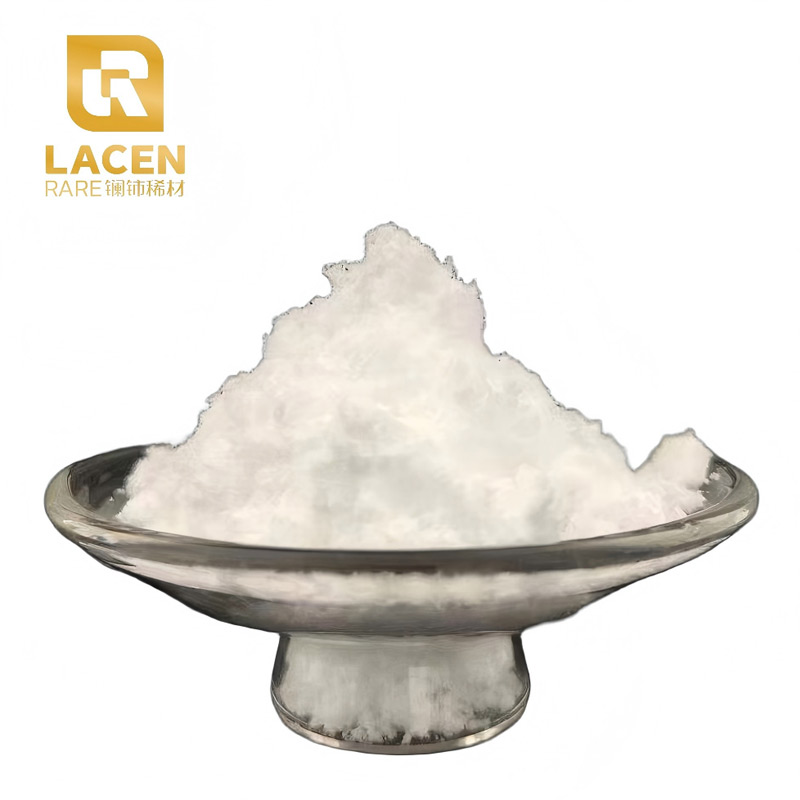
Cerium carbonate, typically represented by the formula Ce2(CO3)3·xH2O, forms the bedrock of numerous advanced material synthesis processes. In its standard state, it appears as a white to off-white crystalline powder. While it remains insoluble in water, it dissolves readily in mineral acids, releasing carbon dioxide in a vigorous, effervescent reaction. This solubility profile makes it an exceptional intermediate in hydrometallurgical extraction and refinement protocols.
When tasked with converting raw rare earth salts into refined oxides, chemical engineers often prefer cerium carbonate over alternatives like nitrates or sulfates. The primary justification is its clean thermal decomposition profile. As the carbonate matrix is subjected to heat, it breaks down into cerium oxide and carbon dioxide. Unlike sulfates or nitrates that can off-gas toxic sulfur or nitrogen oxides during calcination, the carbonate route is environmentally benign and safer for facility operations. Furthermore, the decomposition leaves behind a highly porous framework, which is a significant advantage for subsequent catalytic applications.
As a flagship compound within the supply chain, this material acts as a bridge connecting raw mined ores to market-ready oxides. Standardization at the precursor stage allows manufacturers to predict material behavior during large-scale synthesis. This ensures that scaling up from a laboratory beaker to a multi-ton rotary kiln is both chemically stable and economically viable.
The transformation of raw carbonate powder into high-performance ceria, or CeO2, is primarily achieved through calcination. This thermal treatment involves heating the precursor in an oxygen-rich environment to systematically drive off carbonate groups and water of hydration. In a commercial muffle furnace, the chemical reaction typically initiates around 300°C, where off-gassing peaks, and concludes between 600°C and 800°C, depending on the desired crystallinity of the batch.
Thermal decomposition kinetics play a defining role in establishing the final particle size and active surface area. If the calcination temperature is kept at a low threshold, such as 400°C, the resulting oxide retains a massive specific surface area populated by nanoscale crystallites. Conversely, as the thermal load increases, these fragile crystallites begin to sinter and fuse. While this growth reduces the available surface area, it reinforces structural stability, which is vital for high-friction environments.
Engineers often observe a phenomenon known as pseudomorphic transformation. This dictates that the final ceria particles largely inherit the shape and size distribution of the original carbonate grains. If a production process begins with spherical, uniform precursor particles, the resulting ceria will almost certainly mirror that morphology.
Impact of Calcination Temperature on Ceria Properties | |||
Calcination Temperature (°C) | Average Crystallite Size (nm) | Specific Surface Area (m²/g) | Primary Application Focus |
|---|---|---|---|
400 - 500 | 5 - 10 | 80 - 120 | High-activity catalysts |
600 - 700 | 15 - 25 | 40 - 70 | Automotive emissions control |
800 - 900 | 30 - 50 | 10 - 30 | Solid oxide fuel cells (SOFCs) |
1000+ | > 60 | < 5 | Precision abrasives and ceramics |
The inherent versatility of this precursor translates into a wide array of high-tech industrial applications. By manipulating synthesis parameters, manufacturers tailor ceria to meet the unforgiving specifications of modern sectors. Global manufacturing landscapes are currently shifting; for instance, the rollout of strict environmental regulations—such as Euro 7 emission standards—is forcing automakers to enhance the efficiency of their exhaust systems. Simultaneously, the artificial intelligence boom is driving demand for flawless, ultra-flat silicon wafers. These macro-trends push suppliers toward producing precursors with higher purity and tighter morphological control.
In automotive catalysis, ceria serves as a critical support material due to its Oxygen Storage Capacity. The cerium atom transitions between Ce3+ and Ce4+ oxidation states, storing excess oxygen in oxygen-rich environments and releasing it when levels are depleted. This buffering effect keeps catalytic converters working at peak efficiency to neutralize carbon monoxide and nitrogen oxides. Starting with a premium carbonate precursor ensures the resulting ceria possesses the mesoporous structure needed for rapid gas exchange.
The advanced glass and semiconductor industries rely on ceria-based slurries for Chemical Mechanical Planarization. In this sensitive context, the precursor must yield particles hard enough to shear away material, yet uniform enough to avoid scratching delicate surfaces. Utilizing Fine Granularity Cerium Carbonate for Abrasive Material Production is vital here. Tightly controlled particle size distribution at the foundational stage allows for predictable, defect-free polishing rates.
Furthermore, in the clean energy realm, ceria doped with gadolinium or samarium functions as an efficient electrolyte in Solid Oxide Fuel Cells. These applications require materials capable of sustaining high ionic conductivity. Using an ultra-pure carbonate base ensures the resulting crystal lattice is free from impurities that cause structural defects, thereby maximizing the electrical efficiency and operational lifespan of fuel cell stacks.
In chemical synthesis, the term "High Purity" is a strict technical specification rather than a marketing label. High-purity powders typically contain 99.9% to 99.999% cerium, with ruthlessly controlled limits on iron, calcium, and silicon. The industry is seeing a consolidation toward these high-spec inputs as manufacturers realize that trace impurities act as "poisons" to catalysts, physically blocking active reaction sites or promoting unwanted side reactions.
Trace element control is particularly vital when dealing with adjacent rare earths like Lanthanum, Praseodymium, and Neodymium. Because these elements share nearly identical chemical properties, they are difficult to separate during initial mining. If an engineer allows trace amounts of these elements into the High Purity Cerium Carbonate Powder, it can shift the electronic or optical properties of the final product. In precision optics, even a few parts-per-million of Praseodymium can introduce an unwanted tint or reduce light transmission, leading to costly quality rejections.
While chemical purity commands attention, the physical characteristics of the precursor are just as vital to downstream processing. Particle Size Distribution plays a foundational role in how the material behaves in a furnace. A narrow, tightly clustered distribution is preferred because it ensures uniform thermal decomposition. If a batch contains a chaotic mix of fine dust and coarse granules, the fines will over-calcine and sinter, while coarse particles may fail to decompose entirely, leading to an unusable, inconsistent product.
Optimizing morphology is a balancing act. For bulk structural ceramics, a coarser, denser precursor may be preferred to improve flowability and packing density in molds. In contrast, for nanotechnology, a highly porous, fine-grained precursor is mandatory to achieve the massive surface area required for nanoparticle performance. Additionally, practitioners must handle these powders with care, as they are often hygroscopic. If stored in an open drum, they can quickly absorb moisture and clump, which clogs automated feeding mechanisms in calcination furnaces.
The conversion of the precursor into active ceria can be approached through two distinct philosophies: dry thermal synthesis and wet hydrothermal synthesis. Traditional thermal decomposition remains the industry workhorse. The powder is loaded into a large rotary kiln and subjected to direct heat. This route is highly scalable and cost-effective, making it ideal for bulk abrasives and commercial catalysts. Because the physical morphology of the dry powder dictates the result, managing agglomeration before firing is the key to success.
Alternatively, in hydrothermal synthesis, the carbonate is suspended in an aqueous solution and subjected to pressure and heat inside a sealed autoclave. Rather than relying on direct heat, this method uses pressurized water to facilitate the phase transition. Hydrothermal processing offers atomic-level control over the size and shape of resulting nanocrystals. While it is more complex, it is the preferred method for specialized, low-volume catalysts and electronic-grade materials.
Choosing the right precursor grade must be an informed decision based on your facility's hardware. A plant equipped with continuous rotary kilns will prioritize a grade with excellent flow characteristics, while a lab utilizing autoclaves will prioritize extreme chemical purity and reactivity over bulk physical handling properties.
Verifying input materials from the Rare Earth Carbonate Series is a non-negotiable step. Procurement officers should review the Certificate of Analysis with scrutiny. A rigorous inspection checks for base purity, moisture content, and, crucially, a consistent particle size distribution. Partnering with ISO-certified suppliers minimizes downstream risk. Established vendors possess the infrastructure to provide stable batches consistently, insulating your production line from the volatility often seen in the broader chemical commodities market.
Strategic selection of raw materials defines manufacturing success. Whether developing high-efficiency emission catalysts or precision polishing slurries, ceria-based products rely on the consistency of their chemical inputs. By proactively optimizing precursor parameters and demanding high-purity grades, engineers can improve catalytic activity and enhance precision, ultimately driving innovation in the most demanding technological sectors.
It is highly reactive and decomposes cleanly at relatively low temperatures without releasing toxic byproducts. This allows engineers to exert precise control over the final particle morphology, porosity, and surface area compared to roasting other salts like nitrates or sulfates.
In precision polishing, such as finishing semiconductor wafers, rogue impurities cause micro-scratches and chemical incompatibilities. Using a high-purity precursor ensures a uniform cutting rate and a defect-free surface finish.
High-purity grades feature strict controls on competing rare earth elements and non-rare earth impurities like iron. This level of refinement is essential for electronic and optical applications where trace contaminants would compromise the final product's performance.
For consistent, ultra-pure supply, it is recommended to collaborate with specialized providers that focus on the rare earth carbonate series. These manufacturers offer validated technical data and strict quality assurance for every batch.
The choice depends on your end-use and equipment. Fine granularity is mandatory for nanoscale polishing slurries and catalysts, whereas coarser, denser grades are preferred for bulk ceramic synthesis where dry flowability is the primary concern.


