


Views: 0 Author: Site Editor Publish Time: 2026-08-08 Origin: Site


Modern engineering faces a constant, critical challenge. Manufacturers must achieve high thermal stability and exceptional catalytic efficiency. They must accomplish this without compromising production scalability. To solve this complex problem, industries rely heavily on specific rare earth elements. These compounds help facilities meet stringent performance metrics. They also ensure strict environmental compliance standards are met across global markets.
Without these critical compounds, reaching peak efficiency in advanced manufacturing remains virtually impossible. This article serves as a technical and procurement evaluation guide. We designed it specifically for engineers and sourcing managers. You will learn how to accurately validate these materials. Furthermore, we will show you how to confidently integrate them into your existing manufacturing lines to ensure superior end-product performance.
Performance Multipliers: Rare earth oxides act as essential stabilizers in ceramics and active promoters in catalytic converters, directly impacting end-product lifespan and efficiency.
Specification Precision: Selecting the right purity and particle size distribution (PSD) prevents costly over-speccing while safeguarding against batch-to-batch inconsistencies.
Supply Chain Realities: Navigating geopolitical volatility requires rigorous supplier vetting, transparent Certificates of Analysis (CoA), and localized buffer stock strategies.
Formulation Strategy: Pairing specific combinations, such as ceria and lanthana, yields synergistic effects that outperform single-oxide solutions in high-stress industrial environments.
Standard ceramics frequently suffer from severe brittle failure. They also experience rapid phase degradation under extreme thermal or mechanical stress. You will often see these failures in demanding environments like aerospace components or solid oxide fuel cells (SOFCs). When plain ceramics face rapid temperature fluctuations, their internal crystalline structures shift. This structural shift leads directly to catastrophic component breakdown.
Integrating rare earth oxide materials solves this fundamental business problem through precise phase stabilization. A prime example is Yttria-stabilized zirconia (YSZ). Pure zirconia transitions from a tetragonal phase to a monoclinic phase as it cools. This transition causes a significant volume expansion. The expansion creates massive internal stresses, which crack the ceramic. By doping the zirconia with specific oxides, engineers lock the crystal structure into a stable phase at room temperature. This chemical intervention completely prevents the destructive volume expansion.
Beyond structural stability, these oxides heavily influence functional properties. They drastically improve fracture toughness. They also enhance the ionic conductivity necessary for energy applications. For electronic ceramics, these specific additions refine the dielectric properties. This refinement allows capacitors to hold charges more efficiently at higher operating temperatures.
The operational outcomes speak for themselves. Manufacturers experience vastly reduced component failure rates. End-users benefit from extended operational lifespans in high-temperature environments. Ultimately, incorporating these engineered powders creates a more reliable, resilient, and competitive final product.
Best Practices for Ceramic Integration:
Always match the oxide's thermal expansion coefficient with your base material.
Monitor the firing temperature closely, as stabilized phases can destabilize if over-fired.
Ensure uniform dispersion during the slurry mixing phase to avoid localized weak points.
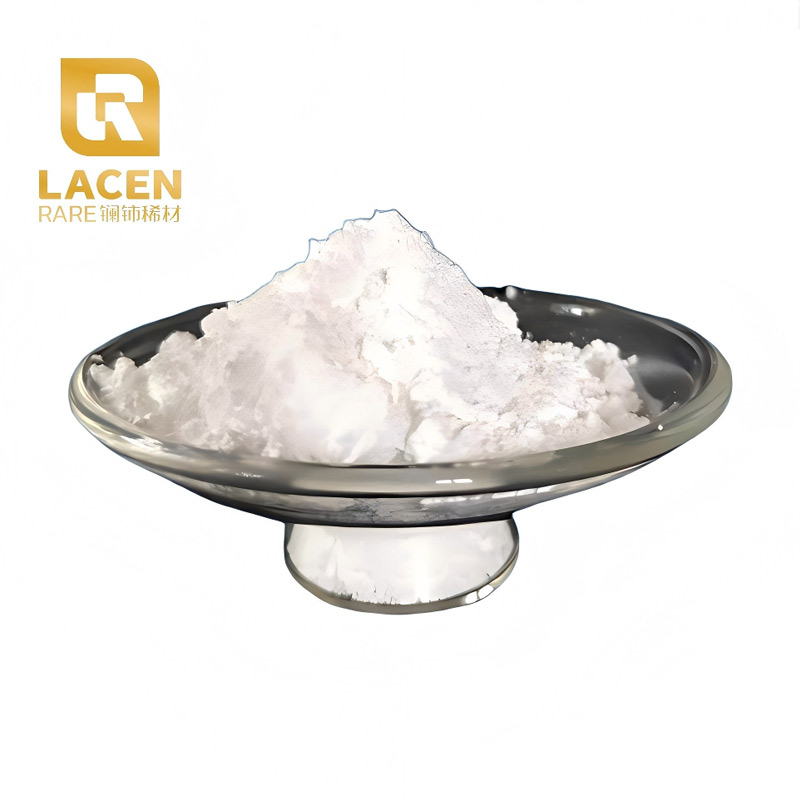
Meeting tightening global emissions standards is a massive hurdle for the automotive and industrial sectors. Additionally, petrochemical plants must continuously improve yields in their cracking processes. Both challenges require highly efficient, incredibly durable catalytic systems. Standard catalysts degrade quickly under intense heat and chemical bombardment. This rapid degradation forces frequent replacements and causes process downtime.
To overcome this, engineers deploy specific oxides to protect and promote the active catalytic metals.
Cerium oxide products offer a unique and vital mechanism known as Oxygen Storage Capacity (OSC). In automotive three-way catalysts, the air-to-fuel ratio fluctuates constantly. Cerium manages this volatility through its remarkable redox ability. It can seamlessly switch between the Ce3+ and Ce4+ oxidation states. When the exhaust is fuel-rich (lacking oxygen), cerium releases stored oxygen to help oxidize carbon monoxide and hydrocarbons. When the exhaust is lean (excess oxygen), it absorbs the excess oxygen to assist in reducing nitrogen oxides. This dynamic buffering keeps the catalyst operating at peak conversion efficiency.
Petrochemical refining, specifically Fluid Catalytic Cracking (FCC), relies on high-temperature reactions. In these units, lanthanum oxide products serve a different but equally critical function. They stabilize the surface area of the alumina supports. Under extreme heat, alumina tends to undergo sintering. Sintering collapses the microscopic pores, which drastically reduces the surface area available for chemical reactions. Lanthanum chemically binds to the alumina lattice. This prevents the pores from collapsing and maintains a high surface area. Consequently, the FCC unit maintains high cracking yields over a much longer operational cycle.
When engineers leverage both materials together, the synergy is undeniable. Combining these specific oxides prevents thermal deactivation across multiple fronts. This strategic formulation extends catalyst lifecycles significantly and ensures steady compliance with emission regulations.
Moving from a laboratory formulation to full-scale production introduces severe risks. Procurement teams must evaluate specifications carefully to bridge the gap between technical requirements and manufacturing realities. A Rare Earth Oxide must meet precise criteria, or the entire production batch could fail.
First, you must understand purity grades. There is a vast difference between commercial grade (typically around 99%) and high purity (99.99% or higher). In some structural ceramics, trace impurities like iron or silica are perfectly acceptable. They do not interfere with the mechanical properties. However, in functional ceramics or advanced optical glass, these exact same impurities cause catastrophic failure. Iron can alter the magnetic properties, while silica can create unwanted glassy phases at grain boundaries.
Second, particle size and morphology dictate how the material behaves during processing. Nanometer-sized powders provide massive surface areas. They lower the required firing temperatures and maximize catalytic reactivity. However, nanoparticles are notoriously difficult to mix evenly. They tend to agglomerate, forming hard clumps in your slurry. Micrometer-sized powders mix much more easily but require higher firing temperatures. You must balance these trade-offs based on your mixing equipment capabilities.
Finally, assessing reactivity is crucial for catalyst washcoats. Engineers measure this using the specific surface area, often referred to as the BET surface area. A higher BET value means more active sites for chemical reactions. If the BET surface area drops too low during powder manufacturing, the resulting catalyst will underperform, regardless of its chemical purity.
We strongly warn against over-speccing your materials. Demanding 99.999% purity for a standard structural abrasive unnecessarily drives up unit economics. It provides absolutely no measurable performance gain. Transparency between your engineering and purchasing teams is essential to define what is truly necessary.
Material Grade Comparison for Industrial Applications
Specification Feature | Commercial Grade (99%) | High-Purity Grade (99.99%+) | Primary Application |
|---|---|---|---|
Trace Impurities | Tolerates minor silica/iron | Strictly controlled (parts per million) | Polishing, Abrasives (99%) vs. Optics (99.99%) |
Particle Size | Broad distribution (Micron) | Tight distribution (Nano/Sub-micron) | Structural Ceramics (99%) vs. Catalysts (99.99%) |
Reactivity (BET) | Low to Moderate | Highly optimized and stable | Glass Additives (99%) vs. FCC Units (99.99%) |
The rare earth market remains notoriously volatile. This volatility stems from highly concentrated geographic processing centers and shifting geopolitical trade policies. Implementation risks are high. A sudden export quota or a regional trade dispute can halt your production lines overnight. You cannot treat these raw materials like standard commodities.
To protect your manufacturing output, you must build robust mitigation strategies. Establishing multi-region sourcing networks is no longer optional; it is mandatory. Relying on a single geographical hub invites severe supply chain disruption. You should qualify at least two independent geographic sources for your critical raw materials.
Understanding pricing drivers also helps you forecast availability. The defense and electric vehicle (EV) sectors consume massive quantities of specific elements. When EV production surges, the demand for magnetic rare earths spikes. This demand indirectly impacts the refining capacity and availability of other oxides. By monitoring these macro-trends, you can adjust your procurement schedules proactively.
Compliance and authoritativeness further complicate sourcing. Ethical sourcing compliance, commonly tracked under ESG (Environmental, Social, and Governance) frameworks, requires strict traceability. Your suppliers must prove their extraction and refining processes meet modern environmental standards. We recommend conducting regular supply chain audits. These audits verify the origin of the materials and ensure your brand is not exposed to ethical sourcing controversies.
Key Supply Chain Defenses:
Maintain a localized buffer stock of at least three months for highly specialized powders.
Write dual-sourcing requirements directly into your internal procurement policies.
Demand full upstream traceability reports from your primary distributors.
Moving from a technical datasheet to active procurement requires a disciplined shortlisting logic. You cannot simply order a bulk shipment based on a PDF brochure. You need a structured validation framework to ensure the material performs predictably in your specific manufacturing environment.
Take the following next-step actions to validate your short-listed suppliers securely:
Phase 1: Certificate of Analysis (CoA) Verification. Never assume the marketed purity matches the actual batch. Request the CoA for a current, ready-to-ship lot. Verify every line item against your internal specification limits. Pay special attention to the trace impurity profile and the exact particle size distribution (D50 and D90 metrics). If the CoA lacks detail, disqualify the supplier immediately.
Phase 2: Lab-Scale Pilot Testing. Once the CoA passes, procure a small sample batch. Run this material through your lab-scale equipment. For ceramics, evaluate the slurry rheology, monitor the firing shrinkage, and test the final sintered density. For catalysts, measure the dispersion rate and test the catalytic conversion rates in a controlled reactor. This phase confirms if the powder behaves as promised.
Phase 3: Supplier Consistency Audits. A supplier might provide a perfect lab sample but fail at commercial scale. You must audit their batch-to-batch consistency. Request historical quality control data for the last ten production runs. Assess their raw material securing capabilities. Do they have direct mine access, or do they buy on the spot market? Spot market buyers present a much higher risk of inconsistent quality.
By following these three phases, you eliminate guesswork. You protect your production lines from unexpected variations and ensure a smooth, predictable scale-up.
Achieving success with rare earth oxides requires a delicate balancing act. You must pair precise chemical specifications with robust supply chain risk management. Failing in either area compromises your final product or disrupts your manufacturing schedule.
Careful validation upfront directly prevents costly manufacturing defects down the line. By understanding phase stabilization, oxygen storage capacities, and the realities of purity grading, you empower your engineering teams to make smarter formulating decisions. Furthermore, acknowledging geopolitical sourcing realities ensures your procurement team stays ahead of market shortages.
Do not leave your next formulation to chance. We encourage you to contact our technical engineering team today. We provide comprehensive formulation reviews, expedite sample requests, and offer custom specification matching to guarantee your production runs flawlessly.
A: A rare earth metal is the element in its pure, unoxidized elemental state. These metals are highly reactive and prone to rapid oxidation in the air. A rare earth oxide is the oxidized state of that metal. Oxides are chemically stable, easier to handle, and safe for long-term storage. Manufacturers primarily use oxides in ceramic powders, polishing slurries, and catalytic washcoats because of this inherent environmental stability.
A: Trace impurities act as severe catalyst poisons. Elements like sulfur, lead, or excessive iron block the active microscopic sites on the catalyst surface. When these sites are blocked, the chemical conversion rate plummets. In high-temperature refining, impurities can also cause premature sintering of the support structure. Therefore, tightly controlling purity ensures the catalyst maintains a long, highly active lifecycle.
A: While academic research into alternatives certainly exists, practical industrial substitution remains highly difficult. Current alternatives severely compromise performance. In extreme thermal environments or high-stress catalytic systems, base metal oxides degrade rapidly. They cannot match the unique phase stabilization or dynamic oxygen storage capacities that these specialized oxides natively provide to advanced manufacturing systems.
A: Cerium oxide powder generally has a shelf life of up to two years if stored correctly. However, it is highly hygroscopic, meaning it rapidly absorbs moisture from the air. You must store it in a tightly sealed, climate-controlled environment. Failure to control moisture leads to severe powder agglomeration. Clumped powder mixes poorly in slurries and drastically reduces catalytic coating uniformity.


